4,809 Electors Made Up the 2022 Presidential College; Nominated Members Cannot Vote
India's President is elected by an electoral college of about 4,800 members (4,809 for the 2022 election), and each vote carries a value set by the Constitution.
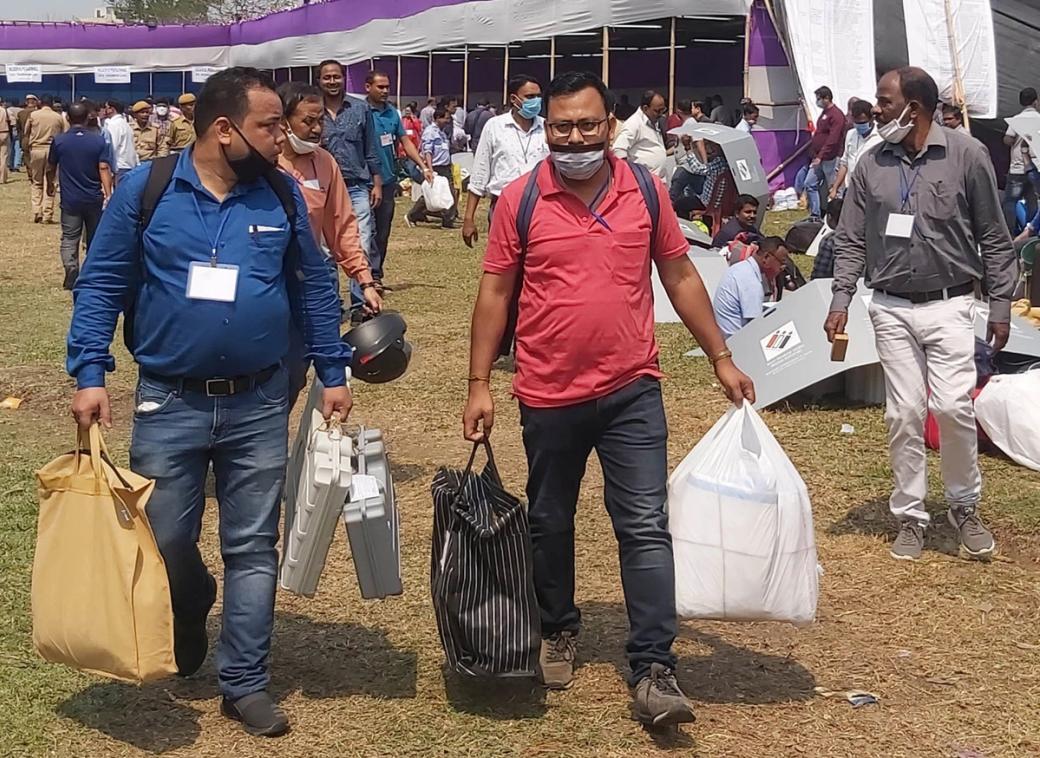
India's President is chosen by an electoral college, not by voters at large. Under Article 54 of the Constitution, the college is made up of the elected members of both Houses of Parliament and the elected members of the state legislative assemblies. For this purpose, the Constitution counts the National Capital Territory of Delhi and the Union territory of Puducherry as states. Outlook says nominated members cannot vote.
The vote itself works differently from a head count. Each elector's vote carries a numerical value, the ballot is secret, and the winner is chosen by proportional representation through a single transferable vote. Articles 55 and 56 of the Constitution set out the method and the President's term. Outlook gives 21 July 2022 as the counting date, to be used if needed. The five-year term points to the next election in 2027.
Who Makes Up the Electoral College
For the 2022 election, the electoral college had 4,809 electors. Of these, 776 were members of Parliament, made up of 233 Rajya Sabha members and 543 Lok Sabha members. The other 4,033 were members of state legislative assemblies. Outlook gives these counts.
On those counts, MPs make up about 16 per cent of the electors and MLAs about 84 per cent. Article 55(1) requires uniformity in the scale of representation of the different states, as far as practicable.
Outlook also sets out who cannot vote. Nominated members of Parliament, of state assemblies and of legislative councils are excluded. Electors held under preventive detention can vote. Those in jail can vote only if they get parole.
How an Assembly Member's Vote Is Worked Out
Under Article 55(2)(a), an elected member of a state legislative assembly receives as many votes as there are multiples of one thousand in a quotient. The quotient is the state's population divided by the total number of elected members of that assembly. Under Article 55(2)(b), if the remainder after those thousands is 500 or more, the member receives one more vote.
Because the divisor is the number of elected seats, a member's vote depends on how many seats the assembly has as well as on the state's population.
The population figure is the one from the most recent census whose relevant figures have been published. A proviso to Article 55 says that, until the relevant figures for the first census taken after 2026 have been published, the reference is the 1971 census. Outlook describes the MLA calculation the same way, using the 1971 census population divided by the number of elective seats and multiplied by 1,000.
An MP's vote is derived from the assembly figures. Under Article 55(2)(c), the total of all assembly votes is divided by the number of elected members of both Houses of Parliament, and each MP receives the result. Fractions above one-half count as one, and smaller fractions are ignored.
Vote Values in 2012 and 2022
In a post dated 14 June 2012, PRS Legislative Research gave an MP's vote as 708. It gave the vote of a Uttar Pradesh MLA as 208 and that of a Sikkim MLA as 7. The difference shows how far an MLA's vote can vary by state.
The same post put the total value of votes at 10,97,012. It put the winning figure at 5,48,507, which PRS describes as the minimum needed to be elected. That figure is slightly more than half of the total. These figures describe the 2012 contest only.
For 2022, Outlook gives the value of each MP's vote as 700. Outlook gives no single figure for MLA votes and says they vary by state.
Ballot Method and Who Can Stand
Article 55(3) provides for proportional representation by means of the single transferable vote. The voting at the election is by secret ballot.
A candidate needs 50 electors as proposers and 50 as seconders, Outlook gives. A candidate must be an Indian citizen, at least 35 years old, and qualified for election to the Lok Sabha. The candidate must not hold any office of profit under the Government of India, a state government, or a local or other authority controlled by a state government.
The nomination also requires a security deposit of ₹15,000, Outlook gives.
The vote itself works differently from a head count.
The Five-Year Term and the 2022 Timetable
Under Article 56(1), the President serves a five-year term counted from the day the President takes office. A President can resign by a letter addressed to the Vice-President, who must pass it on at once to the Speaker of the House of the People under Article 56(2). A President can also be removed by impeachment for violating the Constitution, under Article 61. The President remains in office after the term expires until a successor takes over.
Outlook gives the 2022 timetable as follows. Notification was on 15 June, and nominations could be filed until 29 June. Scrutiny was scheduled for 30 June, and the last date for withdrawals was 2 July. The election was scheduled for 18 July, with counting on 21 July if needed. The outgoing President's tenure was to end on 24 July, and the new President was to be sworn in on 25 July.
Because the 2022 timetable set the new President's swearing-in for 25 July 2022, the five-year term points to an election in 2027.
What Remains Open Ahead of 2027
Two points remain open. The 2027 date is inferred from the five-year term. The MLA values depend on which census figures are in use at that time, under the Article 55 proviso.
For readers following the 2027 contest, the most recent figures in these sources are the 2022 elector count of 4,809 and the MP vote value of 700. The 2012 figures describe that earlier contest only.