Speaker Om Birla Survived March 2026 Removal Motion; Article 94 Sets 14-Day Notice
Article 94 requires at least 14 days' notice and a majority of all the then members to remove the Lok Sabha Speaker. A March 2026 motion against Om Birla was defeated.
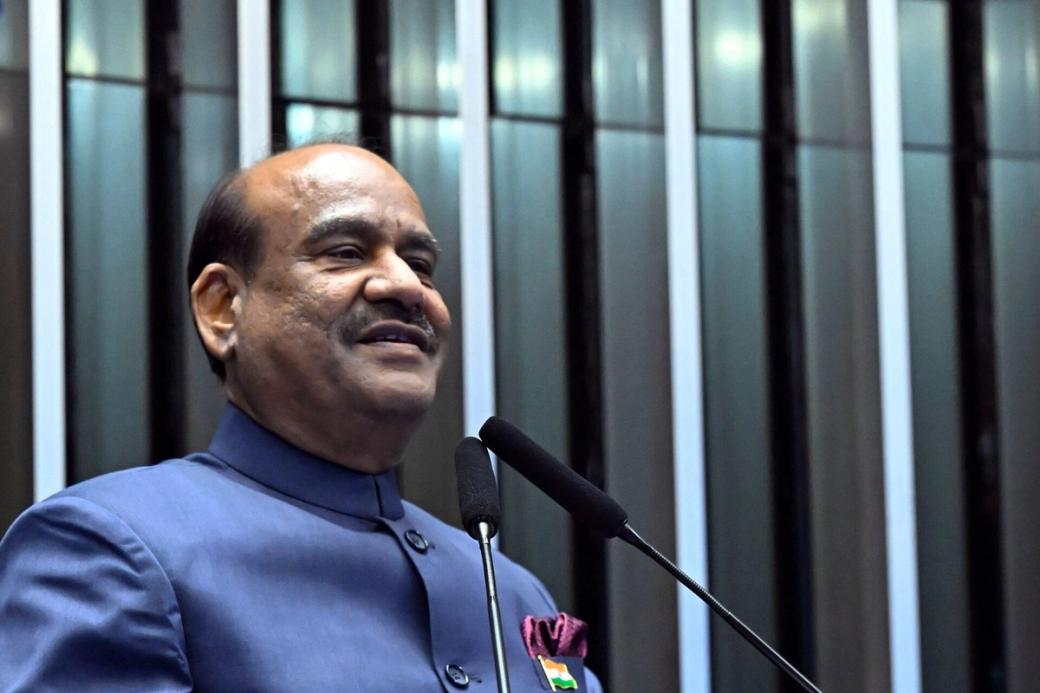
The Speaker of the Lok Sabha presides over the lower house of Parliament, and the Constitution sets a specific route for removing that office. The route is stricter than a simple vote in the House. It requires written notice in advance, a minimum level of support before the motion can proceed, and a majority of all the then members of the House.
Article 94 of the Constitution of India covers both the Speaker and the Deputy Speaker. It sets out three ways the Speaker's office can end. Only one of them depends on a vote, and in March 2026 that route was used against Om Birla, who was elected Speaker of the 18th Lok Sabha.
Three Ways the Speaker's Office Ends
Under clause (a) of Article 94, the Speaker must vacate office if he or she ceases to be a member of the House of the People. Under clause (b), the Speaker may resign at any time by writing to the Deputy Speaker, and the Deputy Speaker may resign by writing to the Speaker. Under clause (c), the Speaker may be removed by a resolution of the House.
The 1948 draft of the article allowed removal for “incapacity or want of confidence”. The final text dropped those grounds. The article was debated on 19 May 1949 as Draft Article 77 and adopted the same day, according to the Constitution of India website.
During the 1949 debate, a member proposed that the Speaker submit resignation to the President rather than to the Deputy Speaker, arguing that a subordinate officer should not receive it. Another member opposed the change, saying the draft protected the independence of both officers. The amendment was withdrawn.
The drafting side answered that resignation goes to the appointing authority. The House of the People appoints the Speaker and Deputy Speaker and acts as a collective body, so resignation need not be given to each member. It would be appropriate to submit it to the Speaker or the Deputy Speaker.
A second proviso says that when the House is dissolved, the Speaker does not vacate office until immediately before the first meeting of the new House.
The 14-Day Notice and Who Must Sign It
The first proviso to Article 94 says no resolution under clause (c) can be moved unless at least fourteen days' notice has been given of the intention to move it.
Drishti IAS says the notice goes to the Secretary-General of the Lok Sabha and must be signed by at least one member. The same summary says the 2026 notice was reported to carry the signatures of more than 100 MPs. The Quint reports that 118 MPs signed the notice.
According to Drishti IAS, a notice seeking Birla's removal had been submitted by 14 February 2026.
The 50-Member Test Before a Motion Is Taken Up
After the notice is delivered, the presiding officer reads it to the House. According to the Drishti IAS summary, at least 50 members must stand in support for leave to be granted. If fewer stand, the motion fails at this stage and is dropped. Leave is the first formal test, and it comes before the final vote under clause (c).
On 10 March 2026, The Quint reported, citing Deccan Herald, that the required number of MPs stood in support and the motion was admitted. Jagdambika Pal presided over that sitting.
Asaduddin Owaisi (AIMIM) questioned Pal's legitimacy because Birla had appointed Pal to the panel of chairpersons. BJP's Nishikant Dubey and Parliamentary Affairs Minister Kiren Rijiju defended Pal's competence. Trinamool Congress's Saugata Roy then suggested a motion to appoint a presiding officer for the purpose, but the House proceeded with Pal in the chair. Mahua Moitra of the Trinamool Congress raised the absence of a Deputy Speaker.
Congress MP Mohammad Jawed read out the notice in the House. Gaurav Gogoi opened the debate, which was allotted ten hours. The scheduled debate had been repeatedly disrupted by Opposition protests demanding discussion on the West Asia situation. The House adjourned on 10 March without a vote, and the debate was set to continue the next day.
The Majority Needed and the Speaker's Position During the Vote
Clause (c) requires a resolution passed by a majority of all the then members of the House. Drishti IAS describes this as an “effective majority”, meaning a majority of all the members then in the House, excluding vacant seats, rather than only those present and voting.
Under Article 96, the Speaker cannot preside while a removal resolution is under consideration. The Speaker can still speak and take part in the proceedings. The Speaker can vote as an ordinary member but has no casting vote if the votes are tied, according to the Drishti IAS summary.
The Quint reports that BJP MP Jagdambika Pal, presiding, announced the result of the voice vote on 11 March 2026.
The Speaker cannot preside while a removal resolution is under consideration.
How the Speaker Was Chosen in June 2024
The Speaker of the 18th Lok Sabha was elected on 26 June 2024, according to the Wikipedia entry on the election. Prime Minister Narendra Modi moved the motion, and Defence Minister Rajnath Singh seconded it, according to Mathrubhumi, which Wikipedia cites. The House adopted the motion by voice vote.
Bhartruhari Mahtab, the Cuttack MP, presided as pro-tem Speaker. Mahtab had been elected on a BJP ticket after six terms with the BJD. The government's choice drew widespread condemnation from the Opposition. Wikipedia reports that under a tradition it describes as established, Kodikunnil Suresh, the most senior elected member, was expected to be named pro-tem Speaker.
Kodikunnil Suresh, a Congress MP and eight-term member from Mavelikara, was the INDIA bloc's candidate. Om Birla, a BJP MP from Kota and a three-term member, was the NDA candidate and the incumbent Speaker. Wikipedia notes that Birla's previous tenure saw frequent suspensions of opposition MPs.
The NDA had a clear majority with 293 MPs. Unaligned parties backing Birla included YSRCP (4), SAD (1), ASP(KR) (1) and VPP (1). The INDIA bloc had 234 MPs plus 3 Independents, but five of its members had not yet taken oath and could not vote. AIMIM (1), ZPM (1) and two Independents did not take part. The opposition did not press for a division, and Birla was elected by voice vote.
The 2026 Motion Against Om Birla
The notice seeking Birla's removal cites partisan conduct and the denial of permission for the Leader of Opposition to speak, according to Drishti IAS.
The Quint reports that opposition MPs also cited the suspension of a record number of MPs, the continued vacancy of the Deputy Speaker post and the muting of Opposition microphones. Rahul Gandhi said Opposition MPs were repeatedly stopped from speaking, and that the Leader of Opposition was not allowed to speak during the first leg of the Budget Session.
Union Home Minister Amit Shah defended the Speaker and criticised the Opposition for questioning the Speaker's impartiality. He said the Constitution makes the Speaker a mediator and a neutral custodian who represents both the government and the Opposition. The ruling side highlighted reforms and increased participation during Birla's tenure.
Gaurav Gogoi said the microphones had been used to silence the Opposition and pointed to repeated interruptions of Rahul Gandhi. He argued that letting a panel chairperson nominated by the challenged Speaker preside would undermine the neutrality Article 96 requires. Gogoi also said the motion was meant to protect the dignity of the House rather than to attack Birla personally.
The Quint reports that the motion was admitted on 10 March 2026 and defeated on 11 March 2026 by voice vote after a day-long debate. Congress MP Mohammad Jawed moved it, and the motion was supported by over 50 MPs, according to the same report. The Quint gives 118 as the number of MPs who signed the notice.