How Protests Get Permission in Delhi, and Where Jantar Mantar Stands Now
Delhi Police has de-notified Jantar Mantar and named three grounds in its place. Here is who grants permission, what Ramlila Maidan costs and what the courts have said.
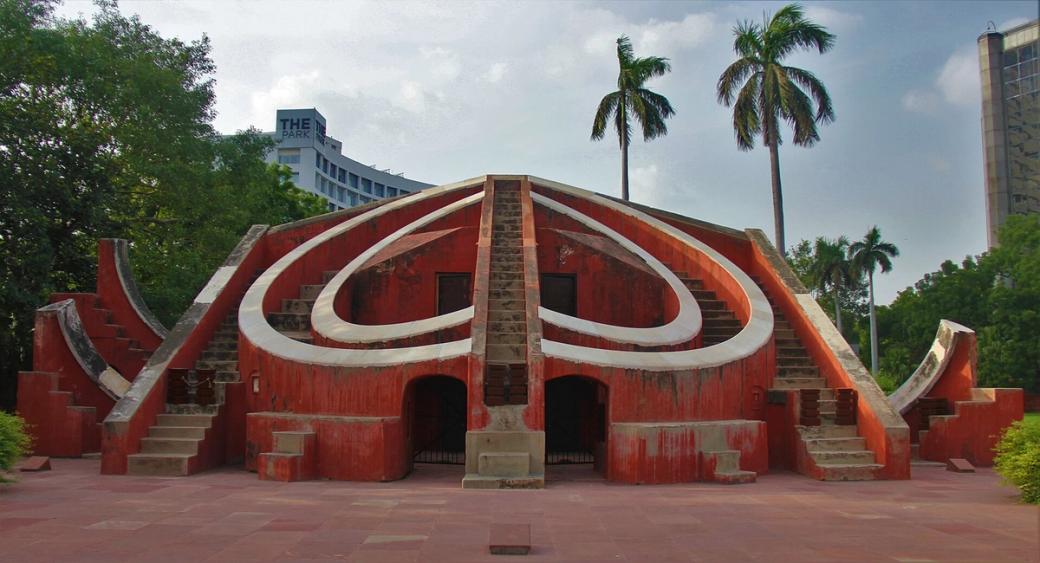
Delhi's list of designated protest sites changed in October 2026. Delhi Police de-notified Jantar Mantar, the site that a 2018 Supreme Court ruling had kept open for limited protests, and named three grounds in its place: Ramlila Maidan, Burari Ground and CBD Ground.
Anyone planning a demonstration in New Delhi now has to check which ground is available, who must approve its use and whether the venue is still in dispute. This explainer covers the permission process, the terms for each ground, and what the Supreme Court has said about the right to protest and the state's power to restrict venues. Two court cases on the October change are pending.
Who Decides Where a Protest Can Be Held in Delhi
A designated protest site is a ground that Delhi Police lists as a venue for demonstrations. The October 2026 order that changed the list was issued by Police Commissioner Anurag Kumar. The Tribune and Metro Vaartha date the order 11 October. LiveLaw and Daily Jagran say Delhi Police de-notified Jantar Mantar on Monday, 12 October.
Booking a ground is a separate step. For Ramlila Maidan, the Municipal Corporation of Delhi's horticulture department grants the booking, and it cannot clear an application until Delhi Police has issued a no-objection certificate. The Tribune describes the certificate as mandatory.
For a Ramlila Maidan booking, the police certificate is therefore a precondition for the civic approval. The two approvals come from different agencies, so the police and the civic body act on the same application in turn.
The Three Grounds Named in October and the Ramlila Maidan Terms
The October order names Ramlila Maidan, Burari Ground in north Delhi and CBD Ground in east Delhi as the new protest sites. Ramlila Maidan is a 12-acre ground that can accommodate 50,000 people. A booking costs ₹1.21 lakh a day. That figure includes a ₹50,000 booking fee, a ₹55,000 security deposit that is refundable, and taxes.
Before taxes, the fee and deposit together come to ₹1.05 lakh, of which ₹55,000 is refundable.
Three dates remain open through the end of 2026: 29, 30 and 31 December. No other date before year-end is open. Within the ground, a small free protest area has a capacity of only 150 people.
Delhi Police has said a detailed, revised SOP for organising demonstrations at the three venues will be issued separately.
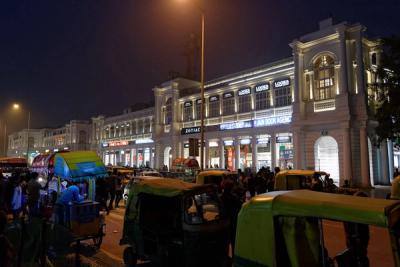
Central Park in Connaught Place is not one of the designated grounds. The Week reports that Delhi Police warned against holding a Tiranga march at Central Park, and that the venue was not a notified protest site.
What the October Order Did to Jantar Mantar
The change followed the recommendations of a committee that the Ministry of Home Affairs had set up to look for other venues for demonstrations, according to Daily Jagran and The Tribune.
Delhi Police told the Delhi High Court that it de-notified Jantar Mantar after a Supreme Court order of 9 October. According to Daily Jagran, the order said that 'some other places with amenities for peaceful protestors need to be identified and designated.' The police statement to the court was made on 13 October. According to Metro Vaartha, Solicitor General Tushar Mehta told the Supreme Court on 15 October that the earlier Supreme Court decision was not the basis for the latest de-notification.
The October order lists Ramlila Maidan, Burari Ground and CBD Ground as the venues for protests and demonstrations. Its title is 'Guidelines for Holding Protests or Demonstrations in Delhi', according to Daily Jagran.
The sequence in brief: a Supreme Court order on 9 October; a Delhi Police order dated 11 October and announced on Monday, 12 October; a police statement to the High Court on 13 October; a Supreme Court notice on 15 October; and a High Court hearing listed for 17 November.
The Two Proceedings Now Before the Courts
In the Delhi High Court, Justice Amit Mahajan, sitting as a single judge, is hearing a petition by Indian Youth Congress president Uday Bhanu Chib that challenges a protest denial. Police told the court about the de-notification in that case, and the next hearing is listed for 17 November.
In the Supreme Court, Chief Justice Surya Kant and Justice Joymalya Bagchi issued notice on 15 October on a petition by advocate Swaty Singh against the de-notification. The court sought the response of the Centre and Delhi Police. The bench orally observed that it would examine whether the authorities had applied their mind to the use and efficacy of Jantar Mantar as a protest site.
Jantar Mantar is no longer a designated protest site, and the courts have yet to rule on the change.
The two cases approach the October change from different angles. The High Court petition concerns a protest denial, while the Supreme Court notice concerns the de-notification itself.
Jantar Mantar is no longer a designated protest site, and the courts have yet to rule on the change.
What the 2018 Supreme Court Ruling Held
In 2018, a bench of Justices A K Sikri and Ashok Bhushan dealt with a National Green Tribunal order. That order had told authorities to stop protests on Jantar Mantar Road and move demonstrators to other places, including Ramlila Maidan and Ajmeri Gate. The Court held that no blanket ban on protests in Central Delhi is permissible.
The judgment also held that citizens cannot claim a right to demonstrate at one particular place only. It called for a balanced approach that protects the rights of both protesters and residents. It also observed that, with social media, physical proximity to the centre of power may not be a necessary condition.
On the state's power over venues, the Court directed the Delhi Police Commissioner, in consultation with other agencies, to devise a proper mechanism for limited use of Jantar Mantar. The Court also suggested a provision for groups to take prior permission from the Police Commissioner, or a delegated authority, before holding a demonstration.
In short, the ruling limited how a venue could be used without ending protest in Central Delhi altogether.
What the Current Terms Mean for a Booking
Under the current terms, three points matter for a protest at a given ground. The first is which ground is involved. Jantar Mantar is no longer designated, and Central Park is not a notified site.
The second applies to Ramlila Maidan, where the Delhi Police no-objection certificate must be in place before the Municipal Corporation of Delhi's horticulture department clears the booking. The initial outlay is ₹1.21 lakh for a day's booking, including taxes and the refundable deposit, and only 29, 30 and 31 December were open when the Tribune reported.
The third is the SOP for the three venues, which Delhi Police said would be issued separately.