How a Rajya Sabha Election Works, and How MLAs' Votes Pick Its Members
Rajya Sabha members are chosen by elected MLAs through a single transferable vote with an open ballot, and the party balance in each assembly shapes the outcome.
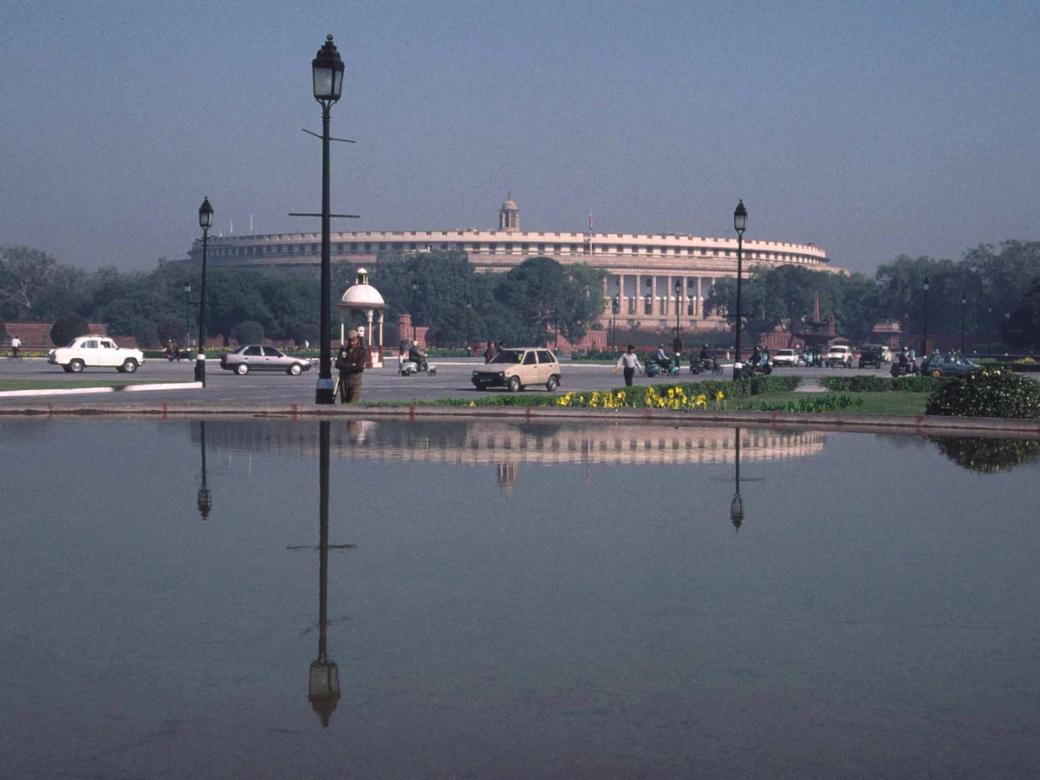
The Rajya Sabha, the upper house of Parliament, has 245 members, and most of them are not chosen by voters at large. The elected members of the state and Union Territory legislative assemblies cast the votes, so the party balance in each assembly shapes which parties win seats in the house. The 2026 cycle covers 72 seats across four scheduled poll dates, or 80 including 8 casual vacancies, from 16 March to 16 October.
This explainer covers who can stand and who votes, how the open ballot works, how the quota is calculated, and why party strength in the assemblies shapes the outcome. It ends with where the 2026 cycle stands, including the seats filled without a vote and the objections raised in Haryana.
Who Can Stand and Who Votes
A candidate must be an Indian citizen and at least 30 years old. Candidates must also not be subject to insolvency or of unsound mind, must not have been proclaimed a criminal, and must not hold an office of profit under the Government of India.
The Constitution allows up to 250 members, and the house currently has 245. Of these, 233 are elected by the elected members of the state and Union Territory legislative assemblies, and the President nominates the other 12. Ordinary voters on the electoral rolls do not take part, so the list that matters in a Rajya Sabha poll is the list of legislators.
Members serve six-year terms. About one-third of the 233 elected members retire every two years, in even-numbered years, so seats fall vacant in batches rather than all at once. Each batch is filled through its own round of nominations, withdrawals and, where needed, polling.
The Open Ballot and Its Legal Basis
Rajya Sabha polls are held by open ballot, which means an MLA's vote is not secret from the party's authorised agent. The Representation of the People (Amendment) Act, 2003 changed Sections 59, 94 and 128(1) of the Representation of the People Act, 1951 to make this possible, and Rule 39AA was inserted by notification on 27 February 2004.
The rules require a party's MLAs to show their marked ballot to that party's authorised agent, and only that agent may see it. Objections over voting secrecy in Haryana in March 2026 turned on who had seen a marked ballot.
In a judgment dated 27 March 2023, a three-judge bench of the Supreme Court of India, headed by Chief Justice D.Y. Chandrachud, rejected a challenge to the open ballot. The bench distinguished Rajya Sabha polls, which use proportional representation, from Lok Sabha polls, which are based on constituencies.
The court held that an open ballot may be used to regulate the voting method and to prevent cross-voting and breaches of party discipline.
How the Quota Is Calculated
Rajya Sabha members are elected through proportional representation by the single transferable vote. Each MLA ranks the candidates in order of preference, and a candidate must reach a minimum number of votes, called the quota, to be elected.
According to the Wikipedia summary of the 2026 polls, the quota is the total valid votes divided by one more than the number of vacancies, with one added to the result. Because the seats up for election differ from one round to the next, the threshold can change from round to round.
The quota therefore works as a threshold, not a share of the full assembly: it is recalculated from the valid votes cast in each round.
Why Party Balance in the Assemblies Shapes the Result
Because only assembly members vote, each party's seat count in an assembly sets how many first-preference votes its candidates can start with. The Supreme Court reiterated that the open ballot was needed to prevent cross-voting and the flouting of party discipline.
According to the Wikipedia summary, the National Democratic Alliance (NDA) rose from 41 to 54 among the seats up in the 2026 cycle, while the opposition INDIA bloc fell from 24 to 19.
Because only assembly members vote, each party's seat count in an assembly sets how many first-preference votes its candidates can start with.
How a Round Moves From Nomination to Result
Each round starts with nominations, followed by a withdrawal period. If the candidates left in the race match the number of seats, they are declared elected without a vote, which happened with 26 of the 37 seats in March 2026.
Where a contest goes ahead, candidates must reach the quota to win. In Haryana in March, counting was to begin only after the returning officer decided on the objections.
Each round is therefore settled on its own seats and its own quota.
The 2026 Cycle: Polls, Unopposed Seats and Objections
The first round, on 16 March, covered 37 seats in Assam, Bihar, Chhattisgarh, Haryana, Himachal Pradesh, Maharashtra, Odisha, Tamil Nadu, Telangana and West Bengal. Of those, 26 seats were filled unopposed, leaving 11 to be decided by a vote.
The 18 June round covered 24 regular seats in Andhra Pradesh, Arunachal Pradesh, Gujarat, Jharkhand, Karnataka, Madhya Pradesh, Manipur, Meghalaya, Mizoram and Rajasthan. The round set for 24 July did not go to polling, because every seat up for election was won unopposed.
Objections over voting secrecy were raised in Haryana on 16 March. The Indian National Congress (Congress) questioned whether secrecy had been maintained for the vote cast by BJP MLA Anil Vij. The Bharatiya Janata Party (BJP) objected to the votes of Congress MLAs Parmveer Singh and Bharat Beniwal, alleging that their marked ballots were visible to people other than authorised agents.
Party sources said Mallikarjun Kharge, the Congress chief, had written to the Election Commission of India alleging 'interference' in the Rajya Sabha polls in Haryana.
The final round covers 12 seats in Uttarakhand, Uttar Pradesh and Madhya Pradesh, scheduled for 16 October 2026: 11 regular seats and one by-election.