Supreme Court Reserves Judgment on One-Year Exception to the Six-Month Bypoll Limit
Section 151A of the Representation of the People Act sets a six-month limit for filling a vacancy, subject to exceptions, including one where less than a year of the term remains.
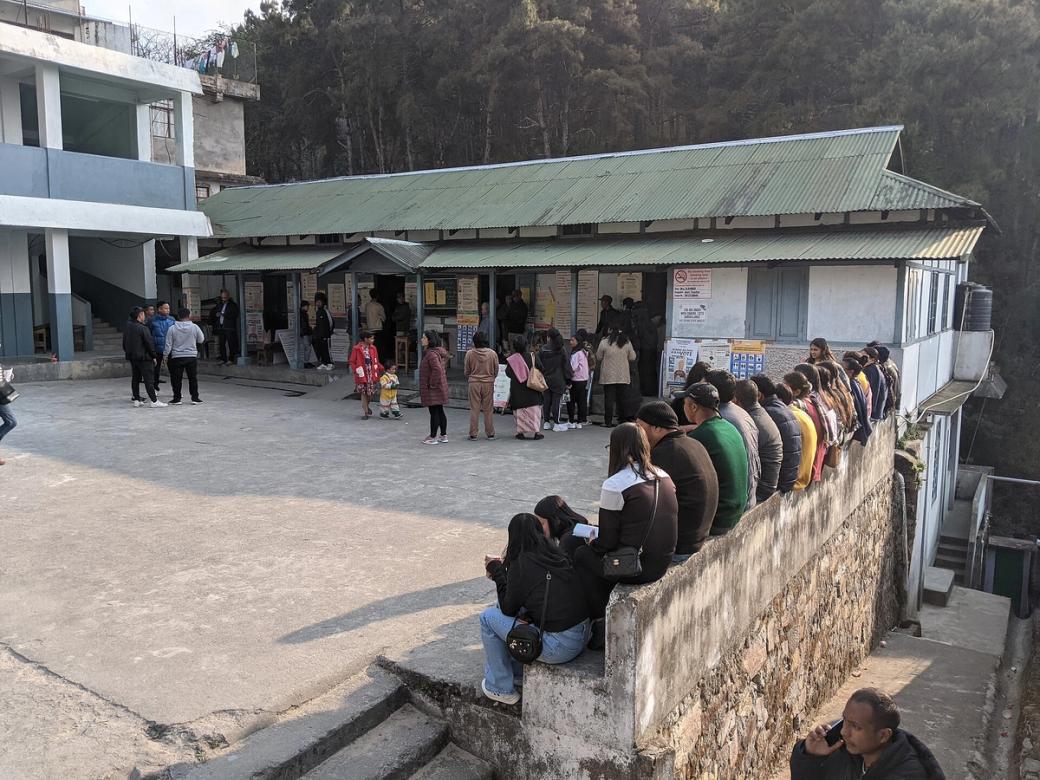
When a Lok Sabha or state assembly seat falls vacant before its term ends, the seat is filled through a bypoll, formally a bye-election. Section 151A of the Representation of the People Act, 1951 sets the deadline for holding one. The Election Commission of India (ECI) runs the process and fixes the polling date.
The section has two exceptions. It does not apply when less than one year of the member's term remains. It also does not apply where the ECI, in consultation with the Central Government, certifies that a bypoll is difficult to hold within six months. Both exceptions have been contested in court. The Supreme Court of India has reserved judgment on how the one-year exception is applied.
The Six-Month Deadline for a Casual Vacancy
A casual vacancy is a seat left empty before the term ends, such as when a sitting member dies. Under Section 151A, the bypoll must be held within six months of the date the vacancy occurs, unless an exception applies.
The Pune Lok Sabha seat shows how the timing works. The seat fell vacant on 29 March 2023 after the death of BJP MP Girish Bapat, so the six-month window closed on 29 September 2023. The Supreme Court Observer gives 3 April 2023 as the date the vacancy was notified.
LiveLaw reports that, according to the respondent's counsel, the ECI wrote to the Governor on 11 August 2023 that bye-elections could not be held. The Supreme Court Observer gives 23 August 2023 as the date the ECI issued its certificate. Both dates fall inside the six-month window.
Who Decides When the Bypoll Is Held
The ECI fixes the polling date. The six-month limit applies unless an exception does. In the current Supreme Court case, the Commission argues that the one-year period must be counted after accounting for the six-month period, LiveLaw reports.
Where the Commission cannot meet the deadline, the exception depends on a certificate that a bypoll is difficult to hold within six months. The ECI issues that certificate in consultation with the Central Government. LiveLaw reports that a 2018 Supreme Court ruling described this certificate route but did not decide it. That ruling also says Parliament did not intend a constituency to remain unrepresented.
In the Pune case, Tribune reports that the Commission gave two reasons for not holding the bypoll. It was occupied with other elections, including preparations for the 2024 general election. It also said the elected representative would serve only a very short tenure before the Lok Sabha's term ended on 16 June 2024, Tribune and LiveLaw report.
In January 2024 the Supreme Court considered laying down guidelines to speed up bypolls after long vacancies. The Chief Justice of India said there must be some duty on the Commission to proceed with alacrity the moment a vacancy occurs, the Supreme Court Observer reported.
When a Bypoll Can Be Skipped: The One-Year Rule
The first exception is the one-year proviso. The six-month requirement does not apply if the remainder of the member's term is less than one year. The 2018 ruling reads the six-month rule as applying where the remainder is not less than one year.
The proviso is measured against the member's term, so the answer depends on the date used for the count. If the remainder is one year or more on that date, the six-month rule applies. The courts and parties differ on the date from which the remaining term is counted, as the following sections explain.
The certificate route is separate. It requires the ECI to certify that the poll is difficult to hold within six months, in consultation with the Central Government, whatever the length of the remaining term.
Whether the one-year condition is mandatory is also disputed. LiveLaw reports that Senior Advocate Singhvi argues the proviso is not mandatory, and that the ECI's counsel says the ECI has leeway to hold elections within the six-month period.
Two High Courts, Two Readings of the One-Year Rule
ThePrint reports that the Punjab and Haryana High Court treated the time limit as an exception to the general duty to hold elections, not the rule itself. In that court's view, the legislative intent is that all constituencies remain represented, so elections must proceed even when less than one year remains in the term.
The Bombay High Court took the opposite view. According to ThePrint, it held that elections cannot be held when the assembly's remaining term is less than one year, and relied on the one-year proviso to cancel a bypoll notification.
ThePrint lists two cases in its account. The Karnal seat in Haryana fell vacant on 13 March 2024, and the ECI's 16 March notification announced the bypoll, with polling scheduled for 25 May 2024. The Akola West bypoll in Maharashtra had a vacancy created on 3 November 2023, and in March 2024 the Bombay High Court quashed the ECI's notification for it. ThePrint's headline describes the split as judicial divergence, and the Supreme Court is now deciding the question.
The six-month clock starts at the vacancy, but the Supreme Court is now deciding how the one-year exception is counted.
The Pune Bypoll Moves Through the Courts
On 13 December 2023, the Bombay High Court directed the ECI to hold the Pune bypoll immediately, stressing that people from the constituency cannot be left unrepresented for a long time, Tribune reports. On 8 January 2024, a bench led by Chief Justice D.Y. Chandrachud stayed that order. The bench said it would set guidelines for bypolls and criticised the Commission's delay.
In the Pune case, the ECI argues that the one-year period should be counted after allowing for the six-month window. The vacancy date of 29 March 2023 left a little under 15 months to 16 June 2024, when the 17th Lok Sabha's term was due to end. Counted from 29 September 2023, the end of the six-month window, under nine months remained.
LiveLaw reports that the Supreme Court will decide from which date the one-year remainder is calculated. Its August 2026 report names Justices Vikram Nath and Sandeep Mehta on the bench. Its October 2026 report names three judges, adding Justice Augustine George Masih. LiveLaw reported on 10 October 2026 that judgment had been reserved.
The Ponda case is a separate matter. By April 2026, the Bombay High Court had quashed the ECI's notification for a bypoll in Ponda, Goa. The court held that the one-year remainder is counted from the declaration of the bypoll result, LiveLaw reports. The notification was issued on 16 March 2026, with polling set for 9 April 2026 and results scheduled for 4 May 2026. The vacancy arose on 15 October 2025, when the sitting MLA died. The assembly term ends on 14 March 2027.
How a Bypoll Winner's Term and the Seat Count Work
A bypoll winner fills the vacated seat for the time that remains in its term. In the Pune case, the ECI cited the limited period the elected candidate would have in office, LiveLaw reports.
The arithmetic therefore runs from the bypoll to the end of the House's term. For the Pune seat, that end date was 16 June 2024. For the Ponda seat, the assembly term ends on 14 March 2027.
The start date of the count changes the answer. The same seat can have more than a year left on the vacancy date and less than a year left once the six-month window has closed. Readers checking a seat should note four dates: the vacancy date, the end of the six-month window, the date the result is declared, and the end of the House's term.