Election Commission Orders Special Summary Revision in 17 States and Union Territories
The Election Commission of India has ordered a Special Summary Revision of electoral rolls in 17 states and Union Territories, with draft rolls due 12 November 2026.
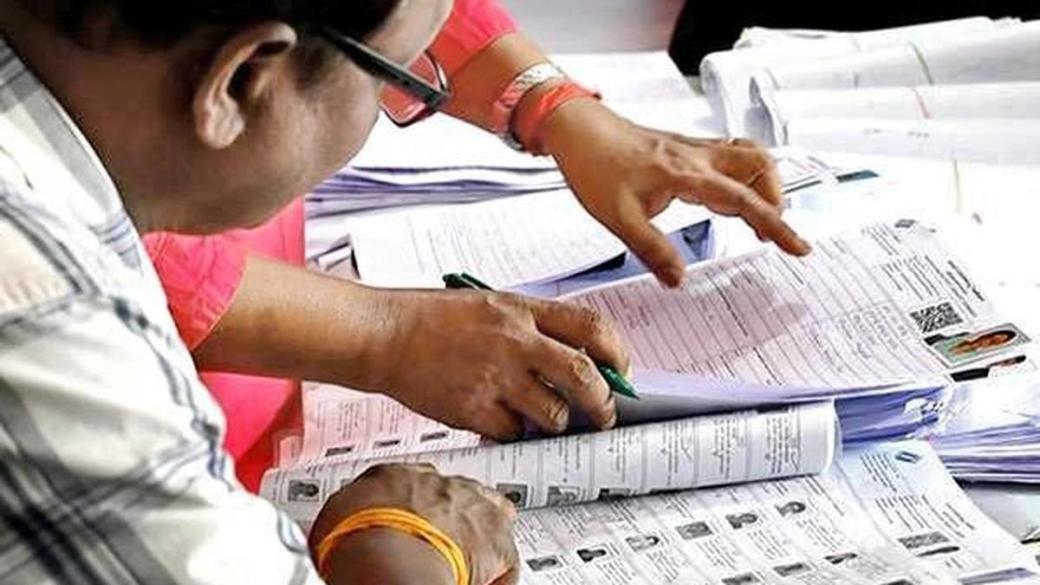
The Election Commission of India ordered a Special Summary Revision (SSR) of electoral rolls in 17 states and Union Territories on 15 October 2026, according to Oneindia. Draft rolls are due on 12 November 2026 and final rolls on 4 January 2027, according to ThePrint, India TV, The Week and the Daily Pioneer.
The revision uses 1 January 2027 as its qualifying date. The claims and objections window opens on 12 November 2026, the same day the draft rolls are published, and runs to 11 December.
Seventeen States and Union Territories Are Covered
The order covers the electoral rolls of Andaman and Nicobar Islands, Assam, Bihar, Chhattisgarh, Goa, Gujarat, Kerala, Lakshadweep, Madhya Pradesh, Manipur, Puducherry, Punjab, Rajasthan, Tamil Nadu, Uttar Pradesh, Uttarakhand and West Bengal.
The Week reports that the SSR is an annual exercise mandated under election law, and it links the revision to polls due early next year. Kalinga TV names Uttar Pradesh, Uttarakhand, Punjab, Manipur and Goa as the states with assembly elections due.
India TV reports the Commission's stated aims as enrolling eligible voters, particularly young and first-time electors, correcting errors in existing entries and improving the accuracy of voter lists.
How the Law Governs Roll Revisions
Business Today reports that the revision is carried out under Section 21 of the Representation of the People Act, 1950. AdvocateKhoj's text of the section provides that an electoral roll for each constituency is prepared in the prescribed manner by reference to a qualifying date, and that a roll comes into force immediately upon its final publication under the rules made under the Act.
Under the same section, rolls must be revised before each general election to the House of the People or a State Legislative Assembly, and before bye-elections to fill casual vacancies, unless the Election Commission directs otherwise in writing. The Commission may also order a revision in any year.
The Commission may direct a special revision at any time, for reasons to be recorded. Until that special revision is complete, the electoral roll for the constituency, as in force when the direction is issued, continues in force.
The final rolls for the 17 jurisdictions are due on 4 January 2027, according to ThePrint. Under the section, as AdvocateKhoj reproduces it, final publication is the point at which an electoral roll comes into force.
The Calendar From Draft Rolls to Final Rolls
Polling station rationalisation is due by 2 November 2026, according to ThePrint, India TV and Oneindia, and draft rolls follow on 12 November, when the claims and objections window opens.
The claims and objections window closes on 11 December 2026. The Week says claims are to be disposed of by 28 December 2026, and final rolls are due on 4 January 2027.
In date order, the key dates are 2 November, 12 November, 11 December, 28 December and 1 January 2027, which is the qualifying date, followed by final rolls on 4 January 2027.
For voters in these 17 jurisdictions, the window from 12 November to 11 December is the period in which the reports say claims and objections can be filed.
How Voters Can Check, Add or Correct an Entry
Oneindia reports that voters can review the draft list once it is published, and that if a name is missing or personal details are wrong, they can use the prescribed process to submit a claim or objection within the notified period, which closes on 11 December 2026.
The Week lists three forms. Form 6 is for voter registration by first-time voters and by eligible citizens whose names are missing from the list. Form 7 is for objection to or deletion of a name, including on grounds such as death and duplicate enrolment.
Form 8 is used by existing voters for a change of residence, correction of entries, replacement of an Elector Photo Identity Card (EPIC) and marking of a person with a disability.
The Week also reports that citizens who become eligible on 1 April, 1 July or 1 October 2027 can apply in advance.
Kalinga TV also reports that an amendment will give eligible citizens the right to register for the voters' roll and to modify their particulars.
The claims and objections window opens on 12 November 2026, the same day the draft rolls are published, and runs to 11 December.
How SSR Differs From SIR, and Which States Are Under SIR
The Week says the SSR is about retaining and updating the existing electoral roll, while the Special Intensive Revision (SIR) prepares the roll afresh through a more intensive enumeration exercise.
ThePrint lists Andhra Pradesh, Haryana, Karnataka, Maharashtra, Odisha, Telangana and Delhi among the states where SIR is ongoing or has recently concluded. Oneindia gives a longer list that includes those seven, as well as Arunachal Pradesh and Jharkhand, and also names Chandigarh, Dadra and Nagar Haveli, Daman and Diu, Meghalaya, Mizoram, Nagaland, Sikkim and Tripura.
Kalinga TV reports that the schedule for states and Union Territories where SIR is ongoing or was recently completed will be issued separately. Oneindia says separate revision schedules will be notified for the wider group. Kalinga TV also says a consolidated timetable for Himachal Pradesh, Jammu and Kashmir and Ladakh will be provided separately, accounting for local weather conditions.
India TV reports that the order comes amid a Supreme Court petition by INDIA bloc leaders challenging the SIR process, and Business Today reports that the Supreme Court recently issued notices on a petition by opposition leaders challenging the SIR. India TV also reports protests across the country over the SIR.
Readable Rolls for Parties and Officers' Duties
Political parties will receive voter lists in readable PDF format rather than image files, The Week reports. The same report says the change follows demands from opposition parties, which the Commission had declined until now, citing concerns about tampering with the lists and court orders.
According to ThePrint, the Commission has directed chief secretaries to ensure that election officers, from chief electoral officers down to booth level officers, have enough manpower and resources.
The Daily Pioneer reports that the Commission has barred the transfer of officials connected with the revision without its prior approval, between publication of the draft rolls and publication of the final rolls. It also reports that the electoral registration officer of the concerned assembly constituency is responsible for ensuring that no eligible citizen is left out.
The schedule for the SIR states will be announced separately, according to ThePrint and the Daily Pioneer.