Tamil Nadu's March 2024 Quota Order for Converts to Islam Stays Struck Down
On 15 October 2026 the Supreme Court dismissed Tamil Nadu's appeal against a Madras High Court ruling that struck down a March 2024 quota order for converts to Islam.
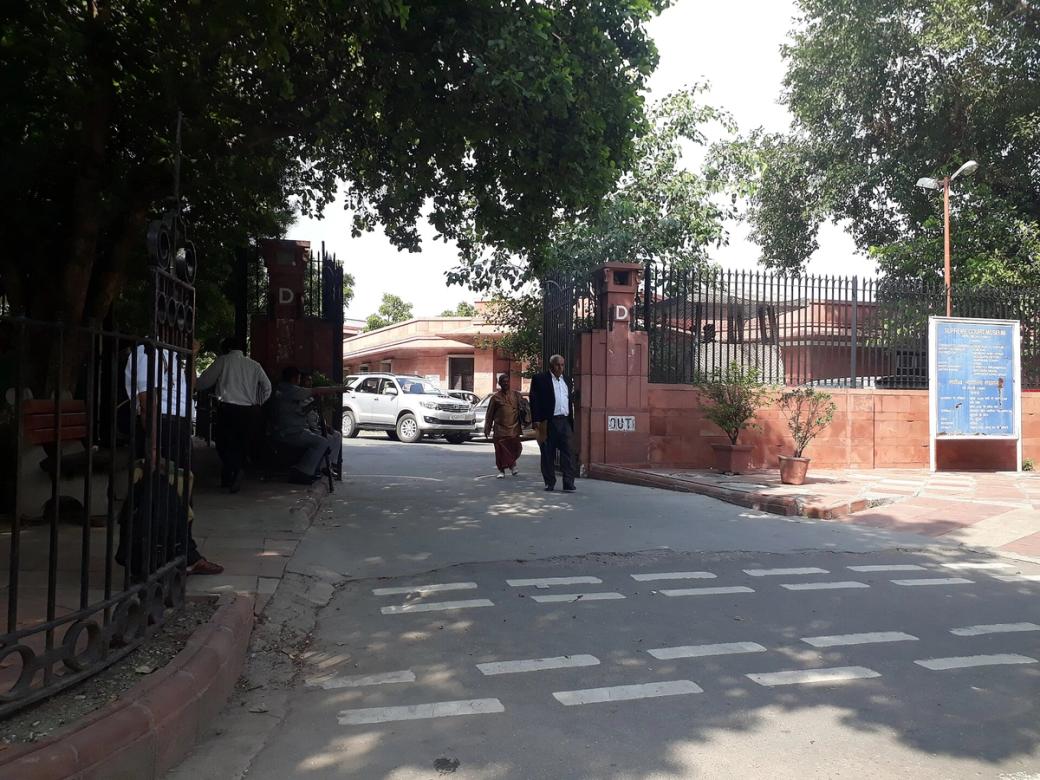
On 15 October 2026, the Supreme Court dismissed Tamil Nadu's appeal against a Madras High Court judgment and held that a person who converts from the Hindu social order to a non-Hindu one cannot claim backward class reservation merely on the strength of the social backwardness associated with the earlier status. A bench of Justices PK Mishra and Shree Chandrashekhar gave the ruling, which upholds the High Court's 25 June 2026 decision striking down a March 2024 Tamil Nadu government order. So far, no further proceedings in the case have been reported.
What the Bench Held on Conversion and Backwardness
The bench held that a person who moves from the Hindu social order to a non-Hindu one cannot claim affirmative action under Article 16(4) of the Constitution only because of the backwardness linked to the earlier status. Backwardness suffered in the antecedent social order cannot by itself be carried forward so as to confer upon him the status of a backward class in the religion to which he has converted. Deccan Chronicle and NewsDrum both report the reasoning in these terms.
Outlook and NewsDrum report that the Supreme Court's reasoning also covers conversion to Christianity, not only Islam. Legal Republic's account of the Madras High Court judgment concerns conversion to Islam.
Outlook reports that pre-conversion caste status cannot automatically transfer to a notified backward community after conversion, because such entitlements depend on membership within a particular social order.
The March 2024 Order and the Madras High Court Ruling
Government Order (Ms) No. 31, dated 9 March 2024, allowed people from the Backward Classes, Most Backward Classes, Denotified Communities and Scheduled Castes who had converted to Islam to be treated as Backward Class (Muslim). Under the order, they could receive community certificates for seven notified Muslim groups: Ansar, Dekkani Muslims, Dubekula, Labbais, Mapilla, Sheik and Syed. The Federal reports that Tamil Nadu provides a separate 3.5 per cent sub-quota for Backward Class Muslims within its overall 30 per cent Backward Classes reservation, and that the order gave converts access to it.
A Division Bench of the Madurai Bench, Justices G.R. Swaminathan and P.B. Balaji, delivered the judgment on 25 June 2026. Legal Republic reports that the court held a convert to Islam becomes simply a Muslim and cannot be placed in one of the seven notified groups, because membership of those groups is determined by birth rather than faith. Legal Republic also reports that the judgment referred to the equality among believers that Islamic teaching proclaims. Deccan Chronicle reports that the Supreme Court bench further noted that the Constitution (Scheduled Castes) Order, 1950, restricts Scheduled Caste status to persons professing Hinduism, Sikhism or Buddhism. NewsDrum reports that the bench declared the order unconstitutional, reasoning that religious conversion alone cannot establish membership of a community notified for reservation.
The three dates in the case run in sequence: the order on 9 March 2024, the High Court judgment on 25 June 2026 and the Supreme Court ruling on 15 October 2026. The case moved from a division bench of the Madurai Bench to a two-judge bench of the Supreme Court.
What It Means for Converts in Tamil Nadu and Other States
In Tamil Nadu, the Supreme Court's dismissal upholds the High Court's judgment, so the March 2024 order remains struck down. Under the bench's reasoning, a convert to Islam cannot claim Backward Class (Muslim) status on the strength of an earlier caste or community.
The Federal reports that the ruling bars converted Muslims from claiming the state's 3.5 per cent BC(M) sub-quota.
The reasoning, as reported, is framed around Article 16(4) and conversion to a non-Hindu social order, not around Tamil Nadu alone. Reports so far do not name any other state's order or rule as affected.
The reports do not say how many community certificates were issued under the order, or how many people held them.
Backwardness suffered in the antecedent social order cannot by itself be carried forward so as to confer upon him the status of a backward class in the religion to which he has converted.
What Happens Next
The Supreme Court has dismissed the state's appeal, and the reports do not describe any further hearing in the case so far.
No statement from the Tamil Nadu government on the ruling has been reported. The reports also do not say whether the state plans any further step.