India-US Trade Deal's First Tranche Finalised, Goyal Says; Signing Awaits US Tariffs
Commerce Minister Piyush Goyal said on 15 October 2026 that the first tranche is in legal drafting, while Commerce Secretary Rajesh Agrawal said signing depends on the US tariff structure.
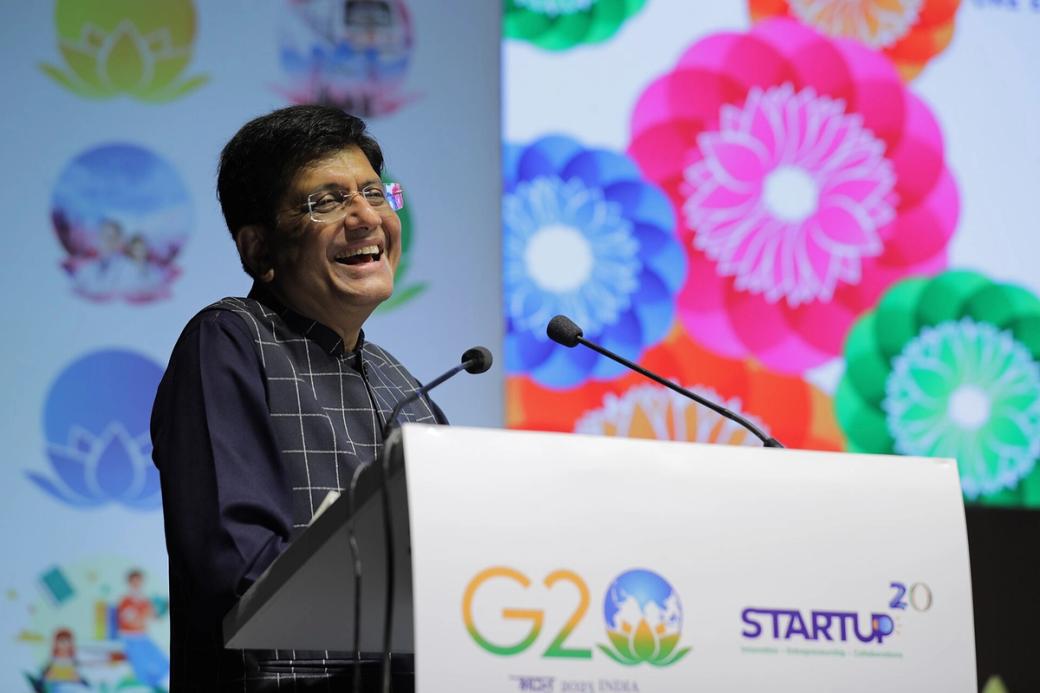
Commerce and Industry Minister Piyush Goyal said on 15 October 2026 that the first tranche of the bilateral trade agreement between India and the United States has been finalised and is going through its final contours and legal drafting. He said he hopes to finalise it soon and to operationalise it once India has a competitive edge over peer countries. Commerce Secretary Rajesh Agrawal said signing depends on the US completing its broader tariff framework.
For readers in India and abroad, the remarks mean the first stage of the bilateral deal is still being drafted rather than in force. Goyal did not say the tranche has been signed or put into operation. The reports tie the next stages to two conditions: the US tariff framework, which Agrawal linked to signing, and a competitive edge, which Goyal linked to operation.
Goyal's Statement and What Has Been Confirmed
The Tribune and Business Today both carried Goyal's remarks, which he made on 15 October 2026. Goyal said the tranche is going through its final contours and legal drafting, and that he hopes to finalise it soon. He said his remarks repeated what he had said the day before, a week earlier and three months earlier.
The Tribune reports that a framework for a temporary trade agreement was announced in February 2026. The current stage, as Goyal described it, is the drafting of the legal text for the first tranche.
All India Radio reported in early February that Goyal had said the first tranche was almost ready. It said a joint statement was expected in about four to five days and that a formal agreement was expected to be signed by mid-March.
The reports do not give a signing date or completion date. They do not say which sectors or tariff lines the first tranche covers, or give any trade values for it.
Goyal's account treats the legal text as the next step, and operation as a later stage that depends on a separate condition, covered below.
Why Signing Waits on the US Tariff Structure
Commerce Secretary Rajesh Agrawal said the talks were in a good position and that he anticipated closing and signing the deal at the earliest possible time. He also said signing depends on the US completing its broader tariff framework.
Business Today reports that Agrawal said the tariff structure still needs to be finalised and that parallel work is under way in the US. It also reports that he tied the deal's finalisation to clarity about the outcome of the US Section 301 investigations. Business Today spells his surname Agarwal, while the Tribune spells it Agrawal.
India Briefing describes Section 301 as a trade enforcement provision and Section 232 as a national security provision. It reports that tariffs under both remain in force after the court ruling.
The Tribune reports that US Trade Representative Jamieson Greer said earlier this month that both countries had identified the key sticking points, and that an agreement was "not imminent".
The February Framework and the Change in US Tariffs
The US tariff backdrop changed in the same month. India Briefing reports that the US Supreme Court ruled 6-3 on 20 February 2026 that the International Emergency Economic Powers Act does not explicitly authorise tariffs.
India Briefing describes that law as one allowing the President to regulate economic transactions during a declared national emergency involving foreign threats. The court found that the statute permits regulation of commerce but does not explicitly authorise tariffs, and struck down the emergency tariffs, concluding that the administration had exceeded its statutory authority.
India Briefing reports that a 10 per cent tariff announced after the ruling was raised to 15 per cent within hours under Section 122, then revised back to 10 per cent, which it says has now come into effect. India Briefing says the provision allows a rate of up to 15 per cent and permits tariffs for approximately 150 days, after which congressional approval is required for an extension. It describes this as the administration's alternative legal route.
India Briefing also reports that a planned visit by the Indian negotiating delegation to the US was postponed after the ruling. Both countries judged it sensible to delay high-level engagement until the legal and economic implications became clearer.
India Briefing describes earlier negotiated tariff structures as having placed Indian exports under an 18 per cent tariff band, and says temporary global tariffs may override that arrangement. All India Radio reported in early February that a US executive order would reduce tariffs to 18 per cent after the joint statement. The two accounts describe the 18 per cent figure differently.
Whether the tariffs described in this section are still in place has not been confirmed in the reporting on the first tranche.
Goyal tied the operation of the deal to that condition, while saying he hopes to finalise the text soon.
The Competitive Advantage Condition
Goyal tied the operation of the deal to that condition, while saying he hopes to finalise the text soon.
Business Today quotes Agrawal making the same point, saying that a trade deal has a very important component beyond market access: preferential market access relative to competitors.
Another Tribune report says India seeks preferential access so its exporters can compete effectively with other countries.
The reports give no tariff rates for the first tranche, so they do not show the size of any advantage over competitors. They give no timeline for meeting the condition.
The Tribune also reports that Goyal said a separate India-EU free trade agreement was expected to be signed in December and could come into effect in February or March 2027.
Goyal's remarks therefore describe two stages: the legal text, which is being drafted now, and operation, which depends on the competitive condition. In his description, the legal text comes first.
What Exporters and Readers Should Watch Next
For exporters, the reports point to three signals: the final US tariff structure, the outcome of the US trade investigations under Section 301, and the legal text once drafting is complete. The reports give no dates for any of them.
The reports do not say which products or tariff lines the first tranche covers.
The legal text is still in drafting, and the reports do not say when drafting will end.
The reports describe no price or product effects from the first tranche. The next step they describe is finalising the legal text, which Goyal hopes will happen soon, and they give no signing date.
The points the reports name as outstanding are the US tariff structure, the Section 301 outcome, the legal text and a competitive edge over peer countries.