Defence Ministry Signs ₹4,106 Crore Satellite, Torpedo Deals
The Defence Ministry signed contracts worth ₹4,106 crore on 15 October 2026 for a new Air Force satellite and Navy heavyweight torpedoes, both from Indian firms.
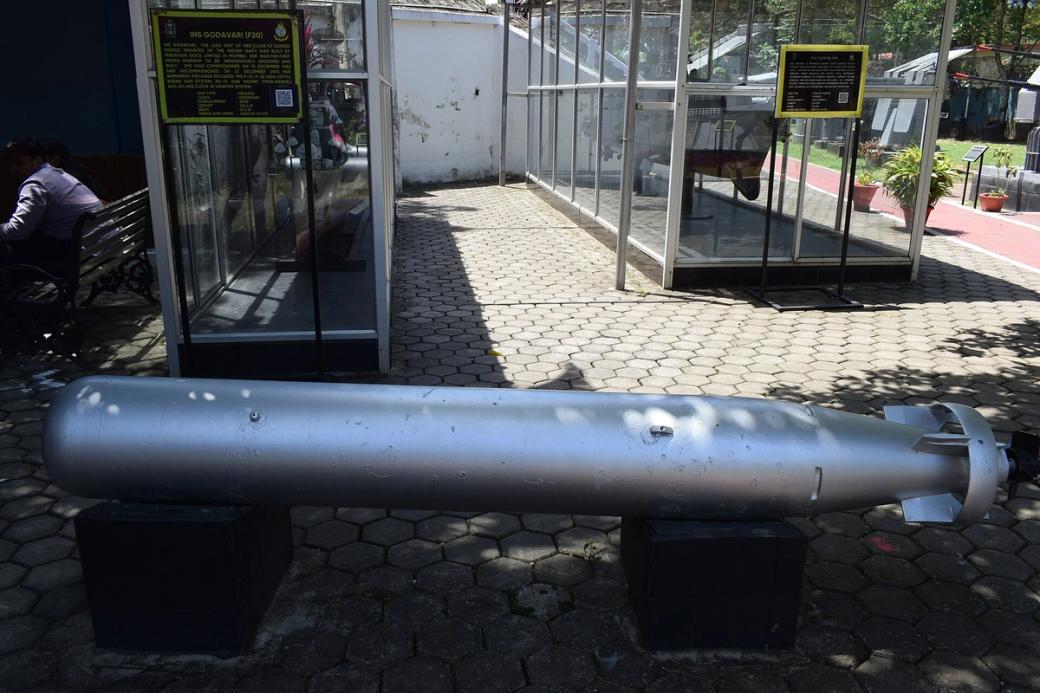
The Ministry of Defence signed two contracts worth a combined ₹4,106 crore in New Delhi on 15 October 2026. The larger, worth ₹2,563 crore, is with NewSpace India Limited (NSIL) of Bengaluru, Karnataka, for the GSAT-7C communication satellite for the Indian Air Force. The second, worth ₹1,543 crore, is with Bharat Dynamics Limited (BDL) of Hyderabad, for Varunastra heavyweight torpedoes for the Indian Navy.
The Ministry presented both orders as part of its push for self-reliance under Aatmanirbhar Bharat and Make in India. For readers in India and abroad, the deals place two defence programmes, one in space and one at sea, with Indian companies.
What Each Contract Buys
The satellite deal covers GSAT-7C, which the Ministry describes as indigenously designed, developed and manufactured. The Ministry says it is meant to make communication for Air Force assets more secure, resilient and seamless. Reference material describes it as a planned military satellite for beyond-line-of-sight links, with a focus on secure software-defined radio networks.
The contractor, NewSpace India Limited, is a public sector undertaking owned by the Department of Space and based at ISRO headquarters in Bengaluru. Reference material says its main objective is to scale up private sector participation in Indian space programmes, and lists a Ministry of Defence agreement with it for GSAT-7B for the Indian Army.
The torpedo deal covers Varunastra, which the Ministry describes as an indigenous anti-submarine heavyweight torpedo developed by the Naval Science and Technological Laboratory (NSTL). Reference material says NSTL is part of the Defence Research and Development Organisation (DRDO). Bharat Dynamics is the named production partner for the weapon.
How GSAT-7C and Varunastra Work
Reference material says GSAT-7C will operate in geostationary orbit and will carry secure software-defined radio links for the armed forces. It gives a launch window of 2027 or 2028 on a GSLV Mk II rocket, with operational service expected by 2030 or in the 2030s.
The existing GSAT-7 is a different satellite, and reference material describes it as a multi-band military satellite used mainly by the Indian Navy. It operates in geostationary orbit about 36,000 km above Earth at 74 degrees East and was launched on 30 August 2013 on an Ariane 5 from French Guiana. Reference material says defence experts expect it to let the Navy stop relying on foreign satellites such as Inmarsat, and that during 2014 exercises it networked about 60 ships and 75 aircraft. Its footprint covers nearly 2,000 nautical miles over the Indian Ocean Region.
Varunastra is described as electrically propelled, with speeds above 40 knots and an operating range of 40 to 50 kilometres, according to reference material. Both reports describe it as ship-launched and as able to engage enemy submarines at long range, while reference material also mentions a submarine-launched variant.
Reference material records that Defence Minister Manohar Parrikar handed Varunastra over to the Navy on 26 June 2016, and puts its indigenous content at more than 95%.
Two Government-Owned Firms and the Self-Reliance Push
BDL is a public sector undertaking under the Ministry of Defence. Reference material gives the Government of India's stake in the company as 74.93%, and says the company holds the Mini Ratna Category-I designation. It makes missiles and has moved into underwater weapon systems.
Both contracts therefore go to government-owned companies, one under the Defence Ministry and one under the Department of Space. The coverage does not say why these two firms were chosen.
The Ministry links both contracts to Aatmanirbhar Bharat and Make in India.
Both contracts were signed in New Delhi on the same day, and neither report gives a delivery date for either system.
Delivery Timelines and Next Steps
Both contracts were signed in New Delhi on the same day, and neither report gives a delivery date for either system.
Reference material gives the GSAT-7C launch window as 2027 or 2028 and dates the satellite's approval to 23 November 2021, nearly five years before the contract was signed on 15 October 2026.
The coverage gives no timeline for Varunastra deliveries, and no comment from NSIL or BDL is carried in the reports on the signings.