Supreme Court Upholds Special Intensive Revision; Phase III Covers 16 States and 3 UTs
The Supreme Court upheld the Election Commission's Special Intensive Revision of electoral rolls in May 2026, as the third phase covers 16 states and three Union Territories.
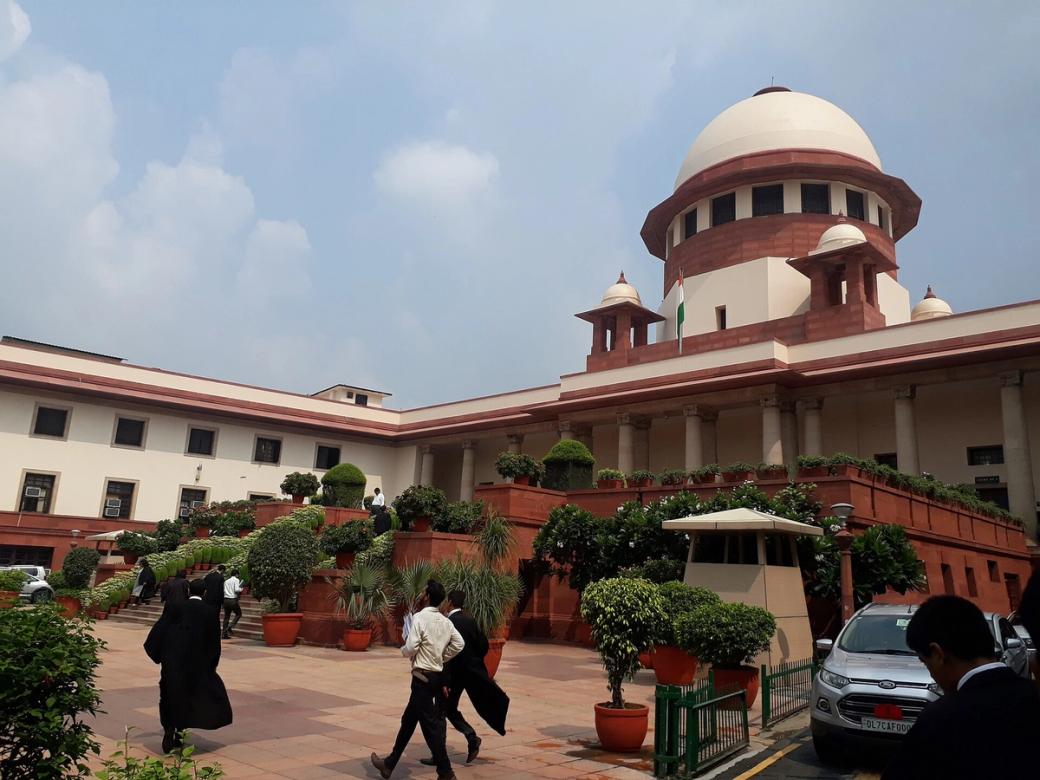
In May 2026, a Supreme Court bench led by Chief Justice Surya Kant upheld the Special Intensive Revision (SIR) of electoral rolls conducted by the Election Commission of India (ECI). The court held that the exercise falls within the Commission's statutory powers and is necessary to maintain the integrity of elections.
The ruling came before the third phase of the revision began, covering 16 states and three Union Territories. Earlier phases, in Bihar and then in nine states and three Union Territories, have already removed names from the rolls in those areas. This article sets out the court's reasoning, the scale of the revision so far, the enumeration steps and the claims process that follows the draft roll.
What the Supreme Court Decided in May 2026
A bench of Chief Justice Surya Kant and Justice Joymalya Bagchi held that the revision falls within the Commission's statutory powers. Enumeration for the third phase was scheduled to begin on 30 May.
The court said that elections depend on accurate rolls, not only on the act of voting on polling day. That point framed its reasoning on why the Commission could carry out the revision.
Writing in The News Minute, Shivasundar noted that the 1960 Election Rules, under which the Commission normally operates, make no mention of a 'Special Intensive Revision'.
Why the Court Accepted the Revision
The court accepted the Commission's justification that more than 40 years had passed since the previous intensive revision of electoral rolls. In that period, the court noted, India saw rapid urbanisation and migration.
The court said these shifts had increased the likelihood of duplicate and inaccurate entries on the rolls, which can undermine electoral fairness.
The Commission said the SIR aims to ensure that no eligible citizen is left out of the rolls while removing ineligible entries, including those of illegal migrants. Officials were also to verify voters' place of birth to identify non-citizens, according to the All India Radio report on that phase.
How Far the Revision Has Reached
Phase I covered Bihar from June to September 2025. According to Wikipedia, the roll fell from 7.89 crore electors to 7.42 crore, a deletion of 5.95 per cent.
Phase II covered nine states and three Union Territories: Uttar Pradesh, West Bengal, Gujarat, Madhya Pradesh, Chhattisgarh, Rajasthan, Tamil Nadu, Kerala, Goa, Puducherry, Andaman and Nicobar Islands and Lakshadweep. Enumeration was scheduled to end on 4 December 2025, according to All India Radio, though Citizen Matters gives 3 December. According to Wikipedia, electors in those areas fell from over 50.99 crore to 45.81 crore, a deletion of 10.2 per cent. Wikipedia gives 27 October 2025 as the start of the phase, while All India Radio dates its launch to 4 November 2025.
The All India Radio report puts the electors in this phase at about 51 crore. Its timetable set the draft roll for 9 December 2025, claims and objections from 9 December 2025 to 8 January 2026, hearings and verification until 31 January 2026, and the final roll for 7 February 2026.
The Federal puts the number covered in the earlier phases at about 60 crore of nearly 99 crore voters across 13 jurisdictions. The ECI put the electors in those first two phases at nearly 59 crore, and the phase totals listed on Wikipedia for those rounds add up to about 58.9 crore.
Phase III: Scale and Schedule
The Election Commission announced the third phase on 14 May 2026. It covers 16 states: Andhra Pradesh, Arunachal Pradesh, Haryana, Jharkhand, Karnataka, Maharashtra, Manipur, Meghalaya, Mizoram, Nagaland, Odisha, Punjab, Sikkim, Telangana, Tripura and Uttarakhand. It also covers Chandigarh, Dadra and Nagar Haveli and Daman and Diu, and the National Capital Territory of Delhi.
About 36.73 crore electors were scheduled for enumeration. Over 3.94 lakh Booth Level Officers (BLOs) were to go house to house, assisted by 3.42 lakh Booth Level Agents (BLAs) appointed by political parties.
Under the May schedule, door-to-door enumeration was to run from 30 May to 14 October 2026, and draft rolls were to be published from 5 July to 21 October 2026. The last of those draft-roll dates, 21 October, is five days from today.
Final roll dates and claims windows differ by state. Karnataka, one of the Phase III states, published its draft roll on 24 August 2026, with claims and objections running to 23 September 2026 and the final roll scheduled for 27 October 2026, according to The News Minute. The May schedule had set the Karnataka draft for 5 August 2026 and the final roll for 7 October 2026. Final roll dates for the other Phase III states are not included here.
The Karnataka draft contains 4.46 crore electors, down from 5.54 crore on the roll as of 16 June. More than 1.07 crore electors have been placed in a category covering absent, shifted, dead, duplicate and other entries.
The court said that elections depend on accurate rolls, not only on the act of voting on polling day.
How Enumeration Works, Step by Step
Citizen Matters, describing the Tamil Nadu exercise, sets out three stages. In distribution, a Booth Level Officer delivers the enumeration form door to door, and the voter presents an identity document and receives the form. In filling, the voter has 7 to 10 days to complete it. In collection, the officer returns, scans the completed form again and confirms that the voter lives in the area.
The accounts differ on what the form asks for. Citizen Matters lists an Aadhaar number, a mobile number and the father's, mother's and spouse's names, while the Wikipedia summary of the Bihar exercise describes pre-filled forms asking for a photograph, date of birth, parents' names and electoral photo identity card (EPIC) numbers.
Citizen Matters lists government identity cards, Aadhaar cards, birth certificates, passports, education certificates, permanent residence certificates, land or house allotment documents and family registers as documents to keep ready for verification.
The Wikipedia summary says that in Bihar, electors who were not on the 2003 rolls had to submit one of 11 specified citizenship documents.
Checking a Name and Filing a Claim
The News Minute lists four ways to see the Karnataka draft roll: the Chief Electoral Officer's website, the Election Commission's voter services portal, the ECINET mobile application and the offices of Electoral Registration Officers.
Three forms cover different changes. Form 6 is for adding a name to the roll, Form 7 is used to challenge a wrongful inclusion or request a deletion, and Form 8 covers corrections to an existing entry and a change of residence.
A rejected claim can be taken to the District Magistrate or Deputy Commissioner, with the first appeal to be filed within 15 days of the ERO's final order. A second appeal lies with the Chief Electoral Officer and must be filed within 30 days of the District Magistrate's order.
The Karnataka claims period ran from 24 August to 23 September 2026, so voters who did not appear on the draft roll had about a month to file claims. People whose claims are rejected can apply again under Form 6, according to Karnataka's Chief Electoral Officer.