Ladakh Notifies Sankoo as a New District Carved From Kargil
The Ladakh administration has notified Sankoo as a new district, with four tehsils taken from Kargil and its headquarters at Sankoo.
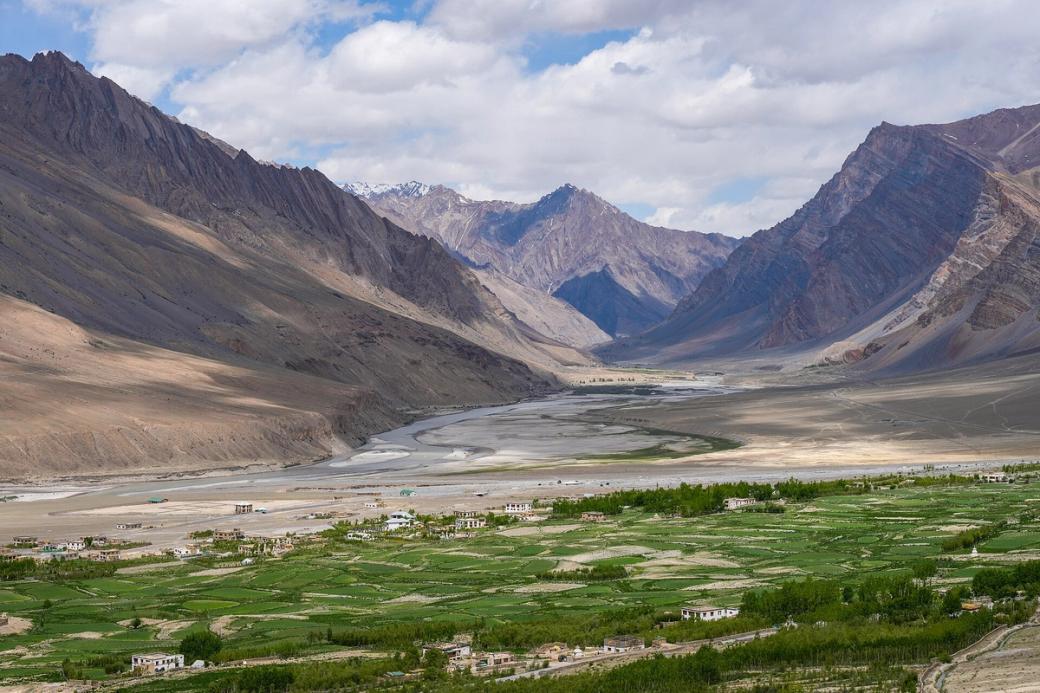
The Ladakh administration has notified Sankoo as a new district of the Union Territory, with its headquarters at Sankoo. The notification, numbered S.O. 284 and dated 16 October 2026, was issued by the Revenue Department under Section 5 of the Jammu and Kashmir Land Revenue Act, 1996. According to Northlines, Lieutenant Governor Vinai Kumar Saxena announced the district at a public rally in Sankoo on the same day.
Four Tehsils Move Out of Kargil District
The new district comprises four tehsils: Sankoo, GM Pore, TSG and Taisuru, along with the revenue villages specified in the notification.
The notification also modifies the jurisdiction of Kargil district by excluding those tehsils and revenue villages from it. ThePrint places Sankoo within Kargil district, and Northlines refers to residents of the Kargil region.
For residents of those villages, the change is one of district jurisdiction: from the date the notification takes effect, they fall under the new district rather than Kargil.
The two reports count the new district differently. Northlines calls it the sixth new district under Ladakh's reorganisation plan, while ThePrint calls it the eighth district in the Union Territory, following five districts approved in April 2026.
Residents' Long-Standing Demand and a New Hill Council
Residents and local representatives had sought a separate district for Sankoo for a long time. According to Northlines, they pointed to the area's population, its geographical spread and its distance from the existing administrative headquarters.
Northlines reports that the residents argued a separate district would improve access to government services and strengthen local administration.
IBTimes reports that the Lieutenant Governor has constituted a Ladakh Autonomous Hill Development Council for Sankoo under the Ladakh Autonomous Hill Development Council Act, 1997, through a separate notification, S.O. 285. The council will exercise the powers prescribed under that Act, and elections are to be held after formal notification under Section 8 of the Act.
According to The Kashmir Horizon, Saxena described the creation as the culmination of a long-standing aspiration of the area's people. The same report says he credited local leaders, including Kargil Chief Executive Councillor Dr Jaffar Akhoon and MP Haneefa Jan, for their contributions.
Ladakh's Districts Since April
Five districts were created in April 2026, taking Ladakh from two districts to seven, according to Reach Ladakh. Before that, the Union Territory's two districts were Leh and Kargil.
Reach Ladakh reports that three of the new districts were carved from Leh: Nubra, headquartered at Diskit with 30 revenue villages; Sham, headquartered at Khaltse with 27; and Changthang, headquartered at Nyoma with 24. Reach Ladakh put Leh at 44 revenue villages.
Zanskar, headquartered at Padum with 26 revenue villages, and Drass, headquartered at Drass-Ranbirpura with 19, came from Kargil, which Reach Ladakh put at 80 villages.
Reach Ladakh reports that Lieutenant Governor Saxena approved the notification on 27 April 2026 and that a committee held consultations and field visits before finalising its report. All India Radio's report of 28 April says the Ministry of Home Affairs approved the plan in August 2024.
Northlines calls the April step an announcement, while All India Radio says the Lieutenant Governor approved the creation. The Administration's notification S.O. 284 continues Notification S.O. 180, dated 27 April 2026. Northlines places Sankoo as the sixth district in that same reorganisation plan.
All India Radio reports that Saxena called the April creation a historic step that met a long-pending demand. Officials said the new districts would help decentralise administration and speed up public services in remote areas.
Residents and local representatives had sought a separate district for Sankoo for a long time.
What the Notification Means and What Comes Next
According to ThePrint and The Kashmir Horizon, Saxena said on X that the decision was in line with the 'Sabka Saath, Sabka Vikas' vision of Prime Minister Narendra Modi and Home Minister Amit Shah. Northlines reports the same vision was cited at the rally. The Administration's announcement says the district is expected to facilitate governance and public service delivery closer to the people.
Reach Ladakh reports that the April creations are expected to decentralise governance, reduce travel distances, which often exceed 300 kilometres, and ensure quicker delivery of public services.
For readers outside Ladakh, the change is administrative: it alters which district the listed tehsils and revenue villages belong to. The date of Gazette publication sets when that takes effect.
The notification takes effect on the date it is published in the Official Gazette.
Northlines says Ladakh would have eight districts once Sankoo is formally notified and operationalised, while the Administration's notification is dated 16 October 2026.