Census 2027 Records Caste for First Time in February Count, After Houselisting
India's Census 2027 has two phases: houselisting from April to September 2026, then a population count in February 2027 that records caste for the first time.
India's Census 2027 is the 16th census in the series and the eighth since Independence, according to NewsOnAir, which reports that it is the first to be carried out digitally. It has two phases. The first, a houselisting and housing census, was scheduled to run from 1 April to 30 September 2026. The second, a population enumeration, is set for February 2027.
The population count will record caste, NewsOnAir and Business Today report. Onmanorama says caste enumeration is included for the first time. The last comprehensive caste count was carried out between 1881 and 1931 under British rule. The Union Cabinet approved an outlay of ₹11,718 crore for the exercise on 12 December 2025, according to Outlook.
Two Phases Built on One Building and Household List
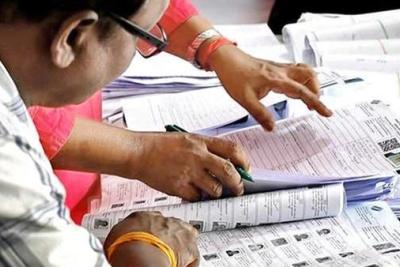
The houselisting phase creates the list of buildings and households on which the population count rests. Business Today reports that the February 2027 enumeration will draw on the data frame built during houselisting. Deccan Herald describes the population count as collecting demographic, socio-economic and cultural details of every person in each household, while houselisting records the housing conditions, assets and amenities of each household.
Onmanorama reports that the houselisting and housing census runs from April to September 2026 as the first phase, with population enumeration as the second. Business Today reports that each state and union territory runs its own 30-day operation within that window, on a schedule set by its own administration.
NewsOnAir gives a different first-round timetable, with self-enumeration from 1 to 15 April 2026 and houselisting from 16 April to 15 May 2026. Deccan Herald, citing a Ministry of Home Affairs notification, gives the state-by-state structure and the overall span of 1 April to 30 September 2026. The two timetables are not reconciled in the reporting.
Online Self-Enumeration and Geo-Tagged Buildings
Before the house-to-house visits in each state, households could submit their details online during an optional 15-day self-enumeration window, according to Deccan Herald and Business Today. Business Today reports that this is the first time the census offered residents an electronic way to submit their details.
NewsOnAir says the web platform accepted entries in 16 languages. The houselisting lists all buildings and structures, and each building is geo-tagged and assigned a unique identification number, the same report says.
Business Today reports that about 30 lakh enumerators will use mobile apps compatible with Android and iOS, and that the government expects the digital methods to improve data quality over paper-based methods. Outlook reports that field staff will use a mobile app supported by a central monitoring portal.
Reference Dates, Migration Data and the Snow-Bound Exception
The main population count uses a reference moment of 00:00 hours on 1 March 2027, according to Deccan Herald.
Ladakh and the snow-bound areas of Jammu and Kashmir, Himachal Pradesh and Uttarakhand use 1 October 2026 instead, according to NewsOnAir and Deccan Herald. Outlook reported in December 2025 that population enumeration in those areas would be carried out in September 2026.
Deccan Herald reports that the Ministry of Home Affairs said in Parliament that the census will collect migration data, including how long a person has stayed at the current residence and the reason for migrating. Business Today's August report lists a migration and residence group among the 40 population questions, covering birthplace, place of last residence and permanent residential address.
What the 33 Houselisting Questions Cover
The government officially notified 33 questions for the houselisting and housing enumeration, Angel One reports. The housing items cover the building number assigned by municipal or local authorities, the census house number, the materials used for flooring and roofing, the condition of the house, and whether it is owned, rented or held under another arrangement.
The household items include the sex of the household head, whether the head belongs to a Scheduled Caste, Scheduled Tribe or other community, and the number of married couples living in the household. The amenity items cover the main source of drinking water, the source of lighting, the type of latrine, the wastewater outlet, the bathing facility, the kitchen, and any LPG or PNG connection.
The list also asks for the main cereal consumed in the household. Angel One reports that the overall operation is budgeted at ₹11,718 crore and covers both housing and population enumeration. A separate gazette date for the houselisting questions has not been reported.
The population count will record caste for the first time.
The 40 Population Questions and the Caste Entry
Business Today reported on 17 August 2026 that the Ministry of Home Affairs had notified 40 population enumeration questions under Section 8(1) of the Census Act, 1948. Census officers will ask households these questions, through the Household Schedule.
The questions are grouped under four headings: personal and family details, education and employment, migration and residence, and children and other details. The personal and family group includes name, age, marital status, religion, and the father's and mother's particulars.
Business Today says the population questions also cover the total number of bank accounts, digital literacy, and optional identity details such as Aadhaar, voter ID, passport and mobile number. The list also asks whether a person holds a driving licence.
One item in the list covers Scheduled Caste, Scheduled Tribe and caste.
In a written reply to the Rajya Sabha, Minister of State for Home Affairs Nityanand Rai said caste questions would be finalised and notified before the second phase begins, Onmanorama reported on 25 March 2026. Rai said the questions would be finalised with input from ministries, departments and users of census data.
The Cabinet Committee on Political Affairs, chaired by Prime Minister Narendra Modi, approved including caste on 30 April 2025, according to Business Today's January report. Business Today says caste will be recorded electronically during the population enumeration phase.
Key Dates, Cost and Background to the Census
NewsOnAir reports that the census began on 1 April 2026. Deccan Herald gives 30 September 2026 as the end of houselisting. The population count is set for February 2027 and uses a reference moment of 00:00 hours on 1 March 2027.
The census was originally due in 2021 but was postponed because of COVID-19, Deccan Herald and Business Today report. A pre-test of the first phase ran in all states and union territories from 10 to 30 November 2025, Deccan Herald reports. The census is conducted under the Census Act, 1948 and the Census Rules, 1990.
Onmanorama and Outlook report that the Union Cabinet approved ₹11,718 crore for Census 2027, while NewsOnAir gives the approved figure as over that amount. Deccan Herald, in its January report, gives an estimated cost of at least ₹13,000 crore. The two cost figures are not reconciled in the reporting.
Angel One gives the 2011 census population as 1,210.19 million. Deccan Herald notes that caste was not counted in the 2011 census.