Delhi-NCR Moves to GRAP Stage III on 6 November, Banning Construction and Demolition
The CAQM has invoked three GRAP stages in Delhi-NCR since 21 October 2026. Here is what the reported orders add, and how the schedule is set.
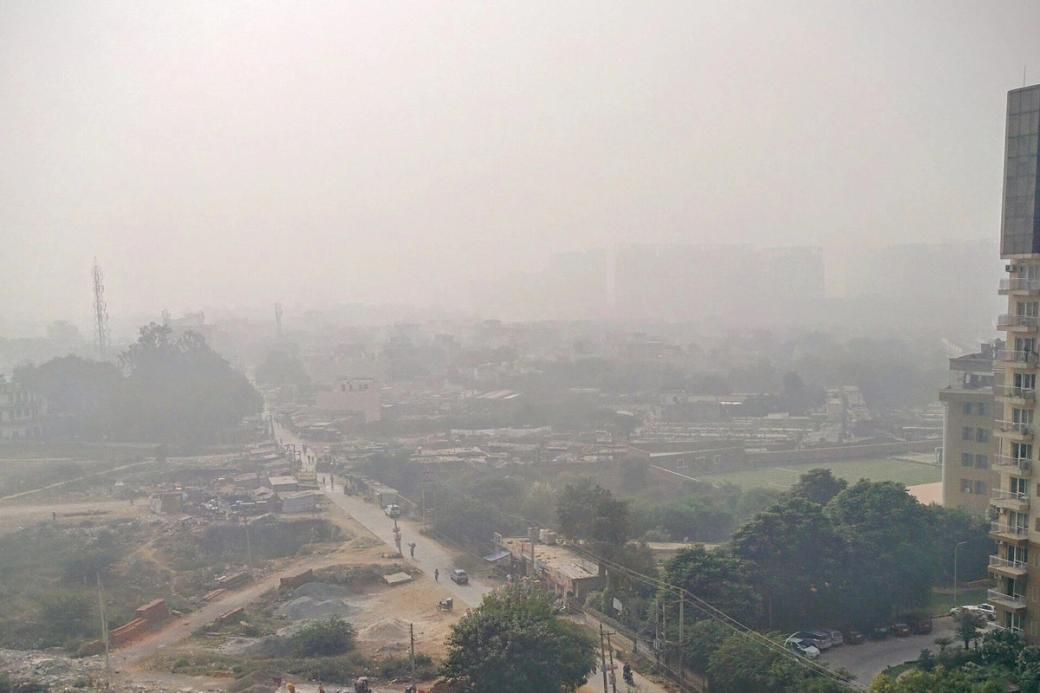
Delhi's air has moved through three stages of the Graded Response Action Plan (GRAP) since late October 2026. The Commission for Air Quality Management in National Capital Region and Adjoining Areas (CAQM) issued an order at each step, and each order adds measures that apply across the National Capital Region (NCR).
GRAP ties its measures to readings of the Air Quality Index (AQI), with each stage carrying its own list of actions. The orders from October and November 2026 show how the plan is being applied, and how the schedule underneath it was revised in 2025 and again in 2026.
How the Schedule Is Set and Who Acts on It
The CAQM revised the GRAP schedule through Direction No. 104, dated 29 September 2026, issued under Section 12 of the CAQM Act, 2021. According to TeamLease RegTech's summary, the revised schedule took effect on issue. The measures for each stage apply only once that stage is formally invoked through an order.
The stages are invoked by the CAQM's Sub-Committee. Responsibility for carrying out the measures is divided. The Delhi government, the NCR state governments, central authorities, pollution control boards and urban local bodies must implement them in their own jurisdictions. Industries, project proponents and commercial establishments must comply with the measures that apply to them once the relevant stage is invoked.
Stage I Begins on 21 October 2026
The CAQM invoked Stage I across the NCR with immediate effect on 21 October 2026. Delhi's AQI stood at 179, in the moderate range, on 20 October. It reached 244, in the poor range, at 2 pm on 21 October.
Forecasts from the India Meteorological Department (IMD) and the Indian Institute of Tropical Meteorology (IITM) indicated that air quality would stay in the poor category. The order is numbered 120017/27/GRAP/2021/CAQM_1671DT, and it applies to the entire NCR rather than to Delhi alone.
Citizens are advised to strictly comply with the Stage I GRAP citizen charter.
Stage II Adds Coal, Firewood and Generator Curbs From 2 November
On 2 November 2026 the CAQM invoked Stage II and directed agencies to act under the first and second stages together. Oneindia cites official figures of 324 for Delhi's AQI at 4 pm that day, although its headline uses 374.
The Stage II measures include more mechanical road cleaning, water sprinkling and anti-smog guns at identified locations. Construction and garbage waste are to be collected and disposed of properly, and open waste burning is to be monitored strictly. Coal and firewood are banned, including tandoors in hotels and restaurants, and diesel generator sets are to be heavily regulated.
Traffic police are to be deployed at busy roads and intersections, and parking fees are to rise to discourage private vehicle use. Checks for valid pollution under control (PUC) certificates are to be stepped up, along with action against vehicles emitting visible smoke. Metro, RRTS, CNG and electric bus services are to be expanded where feasible, and there has been a suggestion that offices make arrangements for shared transport for their staff.
Power supply is to be kept constant so that people and businesses do not depend on diesel generators.
Stage III From 6 November: Construction Ban and Older Vehicle Curbs
The CAQM invoked Stage III across the entire Delhi-NCR with immediate effect on 6 November 2026, in addition to the existing Stage I and Stage II actions. All India Radio reported Delhi's AQI at 380 in its report dated that evening, placing it in the very poor category.
All construction and demolition activity is banned, including earthwork, trenching, road construction and major repairs. Certain construction tied to essential infrastructure projects is exempt.
The vehicle curbs target older light motor vehicles. BS-III petrol and BS-IV diesel light motor vehicles face restrictions on their movement in Delhi.
The measures above are those reported for the CAQM's invocation of 6 November 2026. This article reports the position as of that invocation.
Stage III took effect across the entire Delhi-NCR on 6 November 2026, in addition to the Stage I and Stage II actions already in force.
A Timeline of the Three Invocations
The three invocations followed one another within 16 days. Stage I was invoked on 21 October, Stage II on 2 November and Stage III on 6 November. Each later order was described as applying alongside the measures already in force.
The AQI readings reported run from 179 on 20 October to 380 on 6 November. The Stage II figure differs within Oneindia's article: its text gives 324 at 4 pm on 2 November, and its headline gives 374.
The November 2025 Revision Behind the Stage Bands
The GRAP schedule was finalised on 21 November 2025 after consultations with stakeholders, The Tribune reported. The revision moved several measures from higher stages to lower ones, so under that revision those measures are triggered at lower pollution levels.
The Tribune gave the AQI bands as Stage II poor at 201 to 300, Stage III very poor at 301 to 400, a revised Stage III severe band at 401 to 450, and Stage IV severe-plus with no range given. Whether these bands still apply after the September 2026 direction is not confirmed in the sources read for this article.
Several measures moved from Stage II to Stage I. Key actions include uninterrupted power supply to avoid diesel generator use, extra traffic personnel at bottleneck points, pollution advisories through newspapers, television and radio, and more CNG and electric public transport with differential fares to encourage off-peak travel.
Staggered working hours for government offices in Delhi, Gurugram, Faridabad, Ghaziabad and Gautam Buddh Nagar moved from Stage III to Stage II. Public, municipal and private offices moved from Stage IV to Stage III, where 50% of staff work onsite and the rest work from home.