RBI Launches November Consumer Surveys and Holds Overnight Reverse Repo Auctions
The Reserve Bank of India launched its November 2026 consumer surveys on 3 November and held overnight reverse repo auctions on 3 and 4 November.
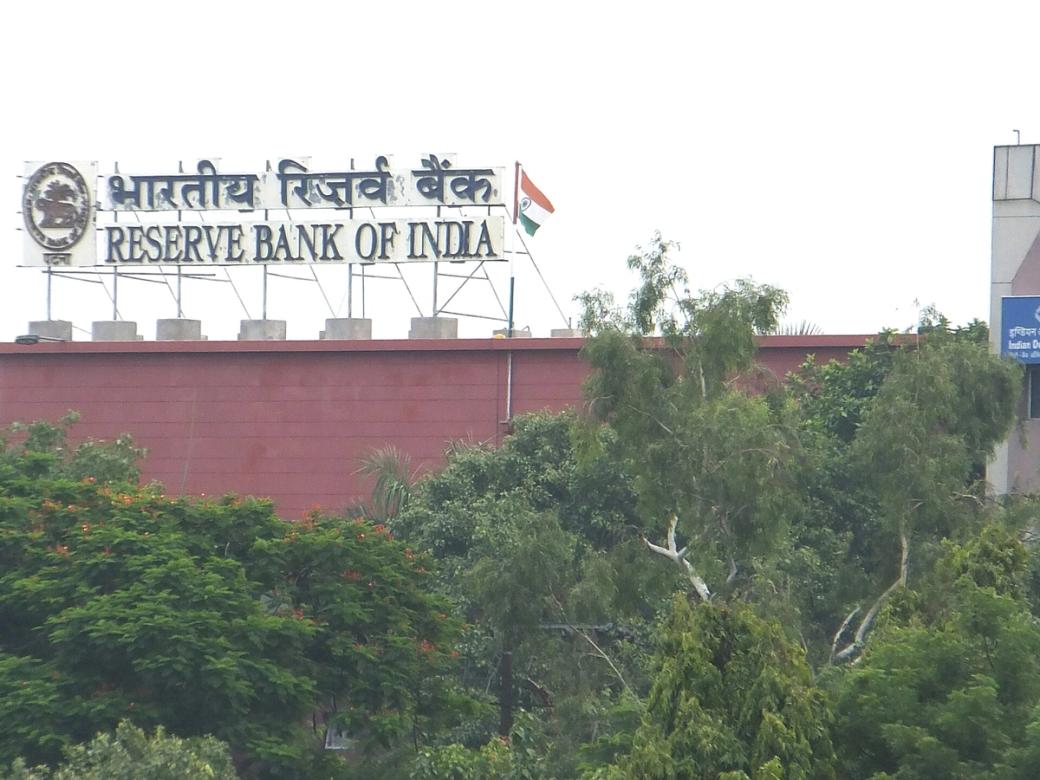
The Reserve Bank of India (RBI) launched the November 2026 round of three consumer surveys on 3 November 2026. The surveys are the Rural Consumer Confidence Survey, the Urban Consumer Confidence Survey and the Inflation Expectations Survey of Households.
On the same days, the RBI ran overnight variable rate reverse repo (VRRR) auctions under the Liquidity Adjustment Facility (LAF). Auctions were held on 3 and 4 November, and a second overnight auction took place on 4 November. In a VRRR, banks park surplus funds with the RBI and bid the rate at which they will do so. According to an explainer on SuperKalam, the RBI ranks the bids by rate, sets a cut-off, and allots funds to bids at or below it, up to a pre-announced amount.
Three Consumer Surveys Start the November Round
The Rural Consumer Confidence Survey covers rural and semi-urban households in 31 States and Union Territories, CrackTarget reports in its current-affairs summary of the RBI releases for 3 November. The survey records views on the economy, employment, prices, income and spending.
CrackTarget reports that the Inflation Expectations Survey of Households covers 19 cities. It asks households about expected price changes over the next three months and over one year. The same summary gives no coverage figure for the Urban Consumer Confidence Survey, which it says was launched alongside the rural survey.
An IASGyan explainer describes the Consumer Confidence Survey as asking about confidence in the overall economic situation, employment, income and spending. The explainer describes the survey as bi-monthly. The RBI uses the results to calculate a Consumer Confidence Index, which offers perspectives on the direction of the Indian economy.
The explainer's readings are from November 2024. The Current Situation Index, which measures confidence in present conditions, stood at 94.0, down 0.7 points from 94.7 in September 2024. The Future Expectations Index, which measures confidence in future conditions, rose 0.5 points to 121.9. Those readings predate the November 2026 round.
How the Overnight Auctions Work
According to SuperKalam, the RBI gives at least one day's advance notice before a discretionary VRRR auction, barring exceptional intraday developments. Scheduled commercial banks then submit electronic bids stating the amount they want to park and the rate they will accept.
The RBI arranges the bids in ascending order of rate and sets a cut-off. Bids at or below the cut-off are allotted, up to a ceiling announced in advance, and the securities are settled.
The explainer says the tool keeps surplus cash from pushing the overnight Weighted Average Call Rate, the policy's operating target, toward the Standing Deposit Facility (SDF) floor. The corridor is symmetric: the SDF sits 25 basis points below the policy repo rate at the centre, and the upper bound sits 25 basis points above it.
The explainer lists the usual sources of surplus cash as surges in government spending, redemptions of treasury bills and bonds, the RBI's forex purchases, and deposit accretions. Under the Revised Liquidity Management Framework of 30 September 2025, the RBI no longer treats the 14-day operation as its primary anchor. It relies mainly on seven-day operations, with fine-tuning auctions ranging from overnight to 14 days.
Auction Figures for 3 and 4 November
RBI release titles show results for the overnight VRRR auction held on 3 November and for the overnight auction held on 4 November. A second overnight auction was also held on 4 November, with its own announcement and result.
CrackTarget gives the 3 November auction a notified amount of ₹50,000 crore, with ₹23,905 crore accepted at a cut-off of 5.49%. It describes the operation as one-day, while the RBI's release titles call it overnight.
For comparison, SuperKalam gives an overnight VRRR on 23 September 2026 with a notified amount of ₹75,000 crore. Total bids received that day came to ₹87,993 crore.
On 4 November the RBI also published full results and cut-off results for the 91-day, 182-day and 364-day treasury bill auctions. On 3 November it published results of state government securities auctions.
The RBI launched the November 2026 round of three consumer surveys on 3 November 2026.
Citizen's Charter Figures for October 2026
An RBI release dated 2 November covers applications received under the Citizen's Charter, with status as on 31 October 2026. CrackTarget reports that the RBI processed 15,186 applications, and that 15,164 of them, or 99.9%, were handled within timelines.
CrackTarget also gives 15,725 new applications received in October, 2,666 pending at the start of the month and 2,498 pending at the end. It says the charter covers 206 services, with applications filed online through the PRAVAAH portal. The top categories, according to the same summary, are currency management and the RBI's role as banker to banks and governments.
The reported figures do not reconcile. CrackTarget's opening pending count plus new applications, less those processed, gives 3,205, not the 2,498 it reports for month-end.
Banking Directions and the Calendar Ahead
Release titles dated 5 November also list two directions under Section 35A read with Section 56 of the Banking Regulation Act, 1949. One concerns the Pusad Urban Co-operative Bank Ltd, Pusad, in Yavatmal district, Maharashtra. The other concerns Urban Co-operative Bank Limited, Dehradun. Both directions concern the extension of a period.
The RBI has also listed a three-day VRRR under the LAF for 6 November 2026. On the same day, it has scheduled an underwriting auction for the sale of government securities worth ₹36,000 crore.
A release dated 4 November announces the constitution of the Technical Consultative Committee for Financial Markets. The RBI has also published the result of the overnight VRRR auction held on 5 November 2026.