How the EU's 18.3 Million Tonne Steel Quota Works for Indian Exporters
Regulation (EU) 2026/1384 sets an 18.3 million tonne duty-free steel quota and a 50% duty above it. Indian exporters face the quota limit, and EU importers must provide melt-and-pour proof.
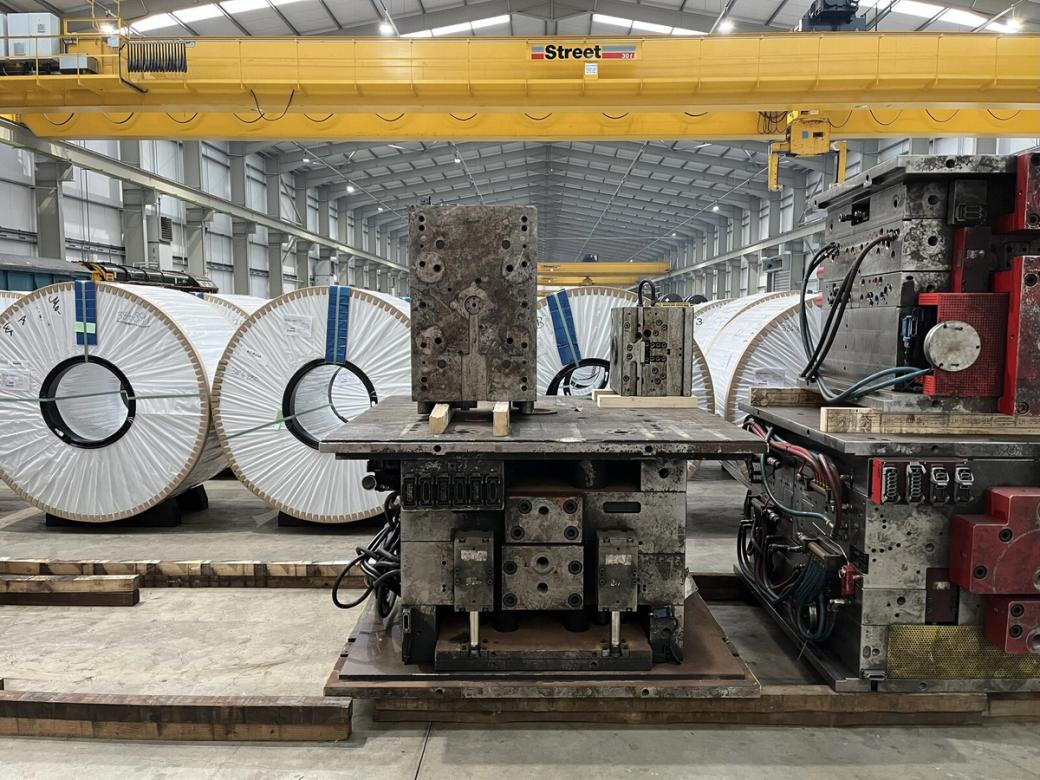
The European Union's steel import regime under Regulation (EU) 2026/1384 applies from 1 July 2026 and replaced the EU steel safeguard that expired on 30 June 2026. It sets annual tariff-rate quotas totalling 18.3 million tonnes. Imports within quota enter duty-free, and a 50% duty applies above it. The European Commission's summary says the measure covers 30 product categories identified by Combined Nomenclature (CN) code, while Crowell and the Grantham Research Institute at LSE count 26.
From 1 October 2026, importers must also declare the country where the steel was melted and poured, and back that declaration with documents. For Indian exporters, the share allocated to India and the products they ship determine how much trade falls under the quota. This article leaves out the carbon border levy.
How the 18.3 Million Tonne Quota Is Built
Crowell, a law firm, gives the annual tariff-rate quota as 18,345,922 tonnes. It derives that figure by applying the EU's 2013 import market share, about 13%, to 2024 steel consumption, and excluding Belarus and Russia. Half of the volume, about 9.15 to 9.17 million tonnes, is reserved for free trade agreement partners, and the other half is open to all third countries on a most-favoured-nation basis. Crowell also says that, on average, duty-free imports of the covered products fall by 47% compared with the expiring safeguard quotas.
Country-specific allocations go to countries that held at least a 5% average import share in a product category over 2022 to 2024, according to Crowell. The Commission can adjust the total through delegated acts, keeping it between 14.4 million and 22.2 million tonnes. Products from Iceland, Liechtenstein and Norway are excluded, as are products from countries subject to bilateral safeguard measures. Crowell says Ukraine receives a more favourable distribution than other free trade partners.
How Quarters and Carry-Over Work
Quotas are administered by quarter. From 1 July 2026 to 30 June 2027, unused quarterly quota passes to the following quarter, according to the Commission's summary and Crowell. The Commission's summary also says carry-over is permitted where average use of a product category's tariff quota exceeds 80% during the first three quarters of the annual period. Crowell says the carry-over rules from 1 July 2027 will be set for each product category by implementing act, weighing import pressure, utilisation (particularly above 80%) and downstream supply.
Country shares are set separately. Eurometal reported, in a piece dated 24 June 2026, that the country-specific allocation would come from a Commission implementing act that had not yet been published, and that talks with several free trade partners were still under way.
What the 50% Duty Adds Once a Quota Is Used Up
Imports above the quota pay an out-of-quota duty of 50% ad valorem. The Commission says the regulation raises the out-of-quota duty to that level. Crowell notes it is double the 25% rate under the expired safeguard, set in Implementing Regulation (EU) 2019/159, and the Grantham Research Institute at LSE describes the same doubling.
Where a product category already faces anti-dumping or countervailing duties, Crowell says the 50% duty applies cumulatively on top of them once that category's quota is exhausted.
Timing at the border can matter. Wolf Theiss says that delays in customs clearance may mean goods are released after the quarter's quota has run out, which would then attract the 50% duty.
The Melt-and-Pour Proof Due From 1 October 2026
Importers must state the melt-and-pour country in the customs declaration and support it with verifiable documentation, Wolf Theiss reports. The primary means of proof is a mill test certificate, which specifies the country of melting and the heat number. The Commission ran a consultation on acceptable evidence from 4 June to 2 July 2026, and had expected the implementing act that determines the documents importers must provide to be adopted by 31 August 2026.
Crowell describes the proof as the country where steel was first melted and cast into its first solid form, such as a slab, billet, ingot or finished product.
Until 30 September 2027, invoices, delivery notes, supplier declarations, customs documents and business correspondence are accepted on their own. Where a mill test certificate lacks the required information, they can also serve as supplementary evidence. After 30 September 2027, other documents are no longer accepted on their own. Wolf Theiss also reports that entry can be refused if the evidence is missing, whatever quota remains.
Wolf Theiss says that from 1 October 2027, the melt-and-pour data collected will be used in allocating quotas. By 30 June 2028, the Commission must assess whether the melt-and-pour country should become the primary basis for quota access. Crowell notes that steel from high-overcapacity countries faces structural medium-term risk whatever further processing occurs.
Wolf Theiss also reports that entry can be refused if the evidence is missing, whatever quota remains.
India's Quota Figures Differ Across the Reports
An Indian government official, citing the draft text of the India-EU free trade agreement released by the EU on 14 September 2026, gave India's country quota as 1,641,470 tonnes a year, SteelOrbis reports. That is 946,616 tonnes under the World Trade Organization (WTO) most-favoured-nation component and 694,853 tonnes under the preferential component. The two components sum to 1,641,469 tonnes, one tonne less than the reported total. Business Today reports that a Commerce Ministry official put India's country quota at 1.9 million tonnes and total access at 2.8 million tonnes, and said Indian exporters have already started shipping under it. LSE gives India's country quota as 1.94 million tonnes, down from 2.79 million tonnes. Shanghai Metals Market (SMM) annualises India's product-specific quotas for July to December 2026 at 1.944 million tonnes.
Business Today says India has secured the quota, SteelOrbis calls the text a draft, and SMM calls the allocation proposed. Business Today also reports that the agreement is expected to be signed by the end of 2026 and is likely to be implemented in 2027, with benefits already being given before formal legal ratification. The export baseline differs too. LSE gives India's 2025 exports to the EU as 2.4 million tonnes, SMM puts the 2022 to 2024 average at 3.064 million tonnes, Business Today says about 3 million tonnes in the last financial year, and SteelOrbis says about four million tonnes a year. Business Today says 2.8 million tonnes would cover more than 80% of exports, while SMM says the draft fixed allocation equals 53.6% of the 2022 to 2024 average of mapped trade.
Which Indian Steel Lines Face the Quota Limit
On SMM's 2022 to 2024 average, hot-rolled flat products are India's largest EU steel export line, at 964,506 tonnes a year. Metallic-coated sheets follow at 513,635 tonnes, then cold-rolled sheets at 406,660 tonnes, quarto plate at 363,426 tonnes and organic-coated sheets at 358,922 tonnes. Tin mill and stainless products form smaller lines.
The draft quotas cover a wide range of steel products, including hot-rolled and cold-rolled sheets and strips, metallic-coated and organic-coated sheets, tin mill and stainless products, merchant bars and light sections, rebars, wire rods, and pipes and tubes. SMM maps the draft allocation to the main lines at 509,605 tonnes for hot-rolled, 283,016 tonnes for metallic-coated and 218,658 tonnes for cold-rolled. Those figures equal 52.8%, 55.1% and 53.8% of their historical flows. SMM concludes that roughly half of India's recent trade would remain dependent on competitive or residual quota pools, or face the 50% out-of-quota duty.
LSE puts the cut for hot-rolled sheets and strips at 34%, and for cold-rolled sheets at 59%. Excluding five newly added categories, it says India's quota across its established 11 product categories falls by 41.5%. SMM measures its coverage against the 2022 to 2024 trade flow.
Crowell says the Commission must assess whether to extend the scope to CN codes currently excluded, and whether to cover downstream products containing significant amounts of steel. The Commission says it will assess the steel-containing products question by 30 June 2027.