September CPI Inflation at 5.54% Is Above the RBI's 4% Target, Within the 2% to 6% Band
India's CPI weighs food, housing and transport by their share of spending; the RBI's 4% target, with a 2% to 6% band, runs to March 2031.
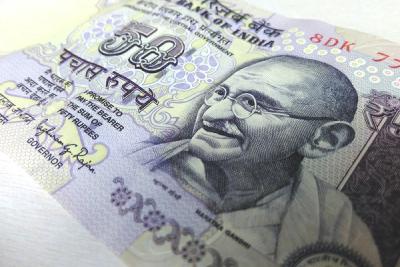
India's retail inflation is measured by the Consumer Price Index, or CPI. It tracks how the prices of a basket of goods and services change over time. The Ministry of Statistics and Programme Implementation (MoSPI) compiles and publishes the headline figure each month, and the Reserve Bank of India (RBI) factors it into its bi-monthly monetary policy decisions.
The current target is 4%, with a tolerance band of 2% to 6%, for the period from 1 April 2026 to 31 March 2031. The September 2026 figure of 5.54% is above the target and inside the band. This explainer sets out how the index is built, how the band works, and what the figures mean for borrowers, savers and household prices.
How the Current CPI Series Was Rebuilt
MoSPI replaced the older series, which used 2012 as its base, with a series that uses 2024 as its base. The new weights come from the Household Consumption Expenditure Survey of 2023-24. The number of items in the basket rose from 299 to 358, made up of 308 goods and 50 services.
The grouping of items also changed. The older series had six groups, and the new one has 12, according to ThePrint's account of the release. The index is expressed with 2024 set at 100.
Index values under the new series start from January 2025, and year-on-year comparisons are valid only from January 2026. A linking factor allows the new figures to be carried back to 2013. The January 2026 figure under the new series was 2.75%.
The Basket and Weights Behind the Headline Figure
Each group in the CPI carries a weight, which is its share of the basket. A group with a larger weight moves the headline more when its prices change. Food and beverages carry 36.75% of the new index, down from 45.86% in the 2012-based series, so a given change in food prices now has a smaller effect on the headline than before. That is a fall of 9.11 percentage points in the food share.
Other group weights in the new series include housing, including utilities, at 17.67%, transport at 8.8%, health at 6.1%, information and communication at 3.61%, and restaurants and accommodation at 3.35%. Price data now comes from 1,465 rural markets, 1,395 urban markets and 12 online marketplaces.
Taken together, food and beverages, housing, transport, health, information and communication, and restaurants and accommodation carry 76.28% of the new index, by the weights reported.
How MoSPI Publishes the Monthly Figure
MoSPI issues the CPI as a monthly release. The September 2026 figures were published on 12 October 2026 as provisional numbers. Headline inflation rose to 5.54% in September from 4.83% in August. Food inflation, measured by the Consumer Food Price Index, rose to 7.74% from 5.97%.
Rural headline inflation was 6.08%, and urban headline inflation was 4.88%. SCC Online's summary of the RBI's October policy statement gives August inflation as 4.8%, which matches MoSPI's 4.83% when rounded.
Food inflation was higher in rural areas than in urban ones in September, at 8.06% and 7.18% respectively. Transport inflation was 5.01%, and restaurants and accommodation rose 9.36%.
Among key items, onion inflation was 108.09%, garlic 54.62%, ginger 62.85% and lemon 36.41%. Potato recorded deflation of 11.50%.
The September reading was the fourth straight month that headline inflation stayed above the 4% target.
The 4% Target and the 2% to 6% Band to March 2031
A gazette notice from the Department of Economic Affairs, dated 25 March 2026, keeps the inflation target at 4% for five years. The tolerance band runs from 2% on the lower side to 6% on the upper side. The government kept the same target in March 2021, so the 2026 notice is the second retention since formal inflation targeting began in 2016.
Formal inflation targeting began in 2016. The six-member MPC first met in October 2016 and was asked to hold annual inflation at 4%, with a 2% to 6% band that applied until 31 March 2021.
Before the new period, the RBI issued a discussion paper in August 2025. It asked whether headline or core inflation should guide policy, whether 4% still fitted, whether the tolerance band width should be changed, and whether the point target should be dropped in favour of a range only. The notice keeps the point target and the band.
The paper also reviewed outcomes under the framework. It described them as hump-shaped, with the middle years nearer the upper band, and linked this to the pandemic and the Russia-Ukraine conflict. It noted that inflation averaged near 4% until about the end of 2019. Average inflation since adoption was 4.9% in the current series, against 6.8% in the period before the framework. On headline or core, the paper raised the question.
The new series gives food and beverages 36.75% of the basket, down from 45.86% in the old one.
How the Monetary Policy Committee Used the Band in October 2026
The Monetary Policy Committee (MPC) met from 5 to 7 October 2026, its 63rd meeting, under Governor Sanjay Malhotra. On 7 October it raised the repo rate by 25 basis points, from 5.25% to 5.50%. The Standing Deposit Facility rate is 5.25%, and the Marginal Standing Facility and Bank Rate are 5.75%. The policy stance changed from neutral to calibrated tightening.
The RBI projects CPI inflation at 5.2% for 2026-27, with quarterly figures of 4.9% in the second quarter, 6.0% in the third and 5.7% in the fourth. It projects 5.6% for the first quarter of 2027-28 and core inflation of 4.4% for 2026-27. The committee expects headline CPI to average almost 5.8% over the next three quarters, though a simple average of the three quarterly projections above is about 5.5%.
Against the band, the 5.2% annual projection sits above the 4% target and below the 6% upper limit, while the 6.0% third-quarter projection touches that upper limit. SCC Online reports the rate decision as unanimous, but it also says Dr. Nagesh Kumar and Prof. Ram Singh wanted the stance kept at neutral.
The same statement puts real GDP growth at 7.1% for 2026-27, with 7.2% in the second quarter, 6.9% in the third and 6.8% in the fourth, and 7.1% for the first quarter of 2027-28.
What the Band Means for EMIs, Deposits and Prices
The band sets the range within which the MPC is expected to keep inflation. The policy rate is the tool the MPC uses. Individual deposit rates are decided by each bank, based on funding needs, competition and other factors, and this explainer gives no figures for them.
SCC Online's summary says rate cuts are off the table in the near term. Further action could be a hike or a pause, depending on the growth-inflation outlook.
On prices, SCC Online's summary of the RBI's October statement says the rise in August inflation was mainly driven by higher food and fuel prices. It gives August CPI as 4.8%, up from 4.5% in July. Food carries 36.75% of the new basket, so food prices are a large part of the headline.
The statement names several risks to the path of inflation: geopolitical tensions, crude oil price volatility, a deficient monsoon, El Niño-related weather disruption and tighter global financial conditions.
The minutes of the meeting are due on 21 October 2026. The next MPC meeting is scheduled for 2 to 4 December 2026.
Related coverage: RBI Raises Repo Rate 25 Basis Points to 5.50%: What It Means for Home Loan EMIs and FDs.