NRO Balances Are Capped at USD 1 Million a Financial Year; NRE Balances Can Go Abroad
NRE balances can be sent abroad, while NRO balances are capped at USD 1 million a financial year and their interest is taxed in India.
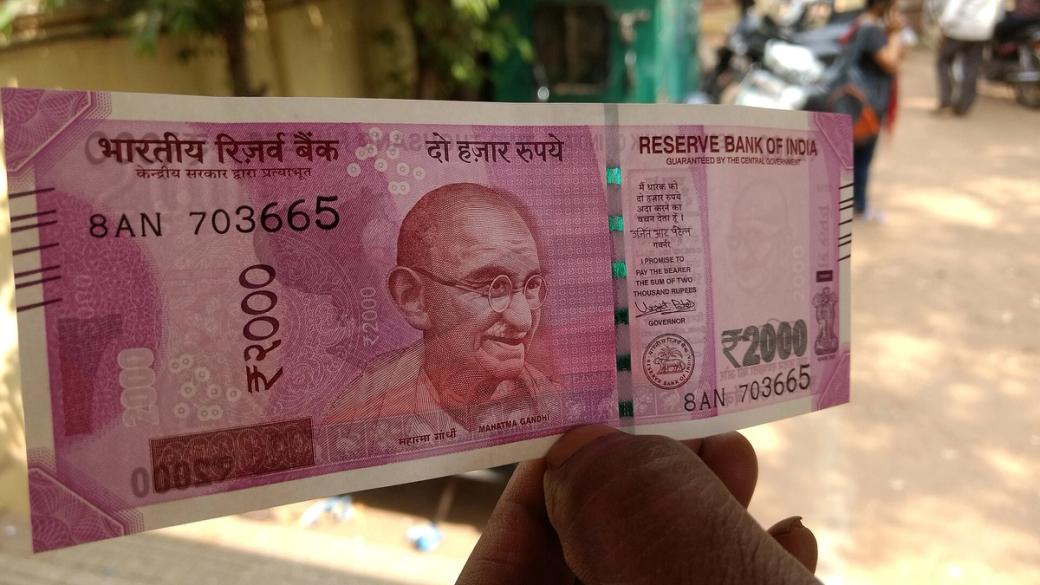
Non-resident Indians (NRIs) and persons of Indian origin (PIOs) who keep money in India may hold one of three bank accounts: NRE, NRO or FCNR(B). The rules differ on who can hold it, what can be paid into it and how money can leave India.
The rules come from the Reserve Bank of India (RBI), in its master direction on deposits and accounts, and from the Foreign Exchange Management (Remittance of Assets) Regulations, 2016, made under the Foreign Exchange Management Act, 1999. NRE balances can be sent abroad, while NRO balances are capped at USD 1 million a financial year.
Who Can Open an NRE, NRO or FCNR(B) Account
NRE and FCNR(B) accounts are open to NRIs and PIOs. The NRO account is wider. Under the RBI's master direction, any person resident outside India may open and maintain an NRO account with an authorised dealer or an authorised bank. The NRO account is for bona fide transactions in rupees.
Individuals and entities of Pakistan nationality or ownership, and entities of Bangladesh ownership, need prior RBI approval to open accounts. Individuals of Bangladesh nationality can open an NRO account subject to holding a valid visa and valid residential permit. There is one exception for NRO accounts: minority community members from those two countries who have been granted a long-term visa (LTV), or whose application for one is under consideration, may open one.
The forms each account can take also differ. NRE and NRO accounts can be savings, current, recurring or fixed deposit accounts, and both are held in rupees. FCNR(B) accounts are held in foreign currency and can only be fixed deposits.
NRE accounts may be opened jointly by two or more NRIs or PIOs, or by an NRI or PIO with a resident relative on a former or survivor basis. During the NRI's lifetime, the resident relative can act only as a power-of-attorney holder. NRO accounts may be held jointly with residents, or with other NRIs and PIOs.
How NRE and FCNR(B) Balances Can Be Repatriated
Repatriation means sending money from India to an account abroad. The FAQ describes NRE accounts as repatriable, but only for credits that have not lost their repatriable character. The master direction permits inward remittances into an NRE account and remittances outside India from it. The USD 1 million limit discussed below is written for NRO balances.
NRE accounts can be credited with interest on the account, interest on investments, transfers from other NRE or FCNR(B) accounts, and maturity proceeds of those investments. Current income such as rent, dividends and pension may also be credited, provided the bank is satisfied that it is current income and that income tax on it has been deducted, paid or provided for. Debits cover local disbursements, remittance outside India, transfers to other NRE or FCNR(B) accounts, and investments in India.
Interest on NRE balances is exempt from income tax under the same master direction. That puts NRE interest on a different footing from NRO interest, which is taxed, as the section on interest below sets out.
FCNR(B) is where the RBI's own material diverges. The FAQ says FCNR(B) deposits are not repatriable except for all current income. The master direction applies the NRE credit and debit conditions to FCNR(B) accounts, and those conditions permit remittances outside India from NRE accounts.
The USD 1 Million Annual Cap on NRO Balances
NRIs and PIOs may remit up to USD 1 million per financial year, which runs from April to March, under regulation 4(2) of the 2016 remittance regulations. That limit covers balances in NRO accounts, sale proceeds of assets, assets acquired in India by inheritance or legacy, and assets acquired under a deed of settlement made by a parent or relative, where the settlement takes effect on the settler's death.
The master direction lists what can be credited to an NRO account: inward remittances from outside India, legitimate dues in India, and transfers from other NRO accounts. Debits are allowed for local payments, transfers to other NRO accounts, and remittance of current income abroad.
Remittance from NRO balances requires an undertaking from the account holder to the authorised dealer. The undertaking states that the money arises from legitimate receivables in India, not from borrowing from another person or from a transfer from another NRO account. If that proves untrue, the account holder becomes liable to penal action under FEMA.
Where a remittance is made in more than one instalment, all instalments should go through the same authorised dealer. The master direction also places transfers from NRO accounts to NRE accounts within the same USD 1 million facility.
Because the limit is set per financial year, the same USD 1 million becomes available again from each 1 April. The cap is the limit that applies to NRO balances in each year.
NRE balances can be sent abroad, while NRO balances are capped at USD 1 million a financial year.
How Interest on NRO Accounts Is Taxed
Interest on NRO savings and fixed deposit accounts is taxable in India. Banks deduct tax at source at a flat 30%, with surcharge and cess added on top. NRIs must file an Indian income tax return for NRO interest and pay tax at the slab rate that applies to their income for the year.
NRIs who hold a tax residency certificate from their country of residence and submit Form 10F may be able to reduce the deduction under a double taxation avoidance agreement (DTAA).
The 2016 remittance regulations add that any remittance under them is subject to the applicable tax laws in India.
When an NRI Returns, and the Latest Rule Dates
The master direction says an NRO account may be designated a resident account when the holder returns to India for any purpose indicating an intention to stay in India for an uncertain period.
The remittance regulations took effect on 1 April 2016. They set the USD 1 million figure, and the master direction makes its NRO remittance limit subject to the conditions in those regulations.