MCA Waives Extra Fees on FY 2025-26 Filings Until 31 December and 31 January
The Ministry of Corporate Affairs has waived additional fees for FY 2025-26 annual filings until 31 December 2026 and 31 January 2027, but not AGM deadlines.
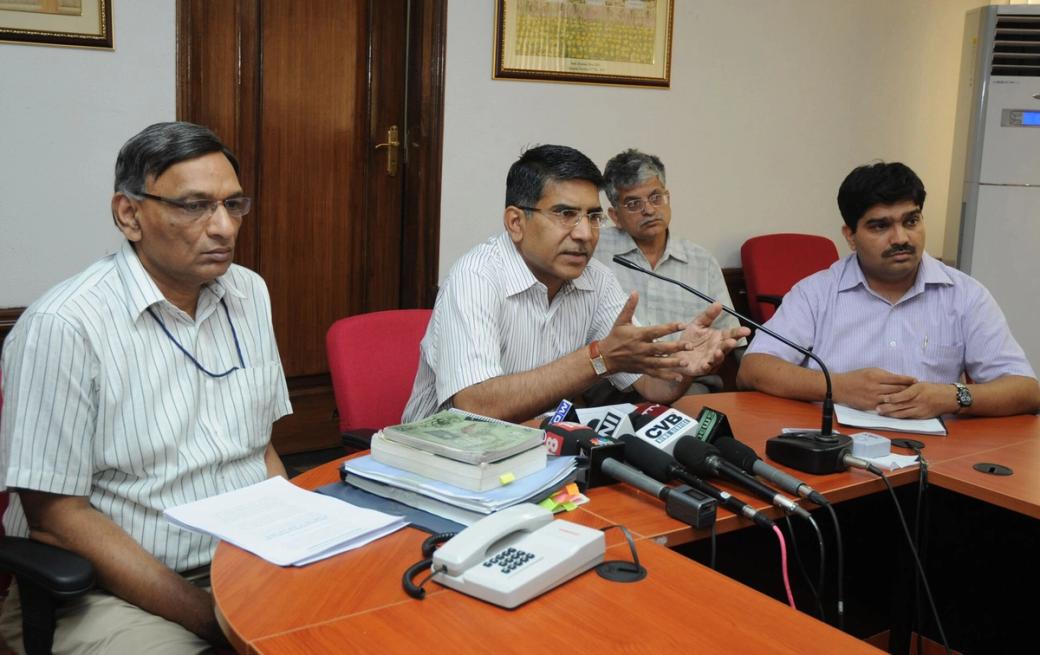
Companies that file accounts and annual returns with the Ministry of Corporate Affairs (MCA) have a window to file FY 2025-26 forms without paying the additional fee. General Circular 05/2026, dated 24 October 2026, sets the end dates at 31 December 2026 for financial statements and 31 January 2027 for annual returns. The relief covers FY 2025-26 forms only.
The waiver removes the additional fee and nothing more. It does not move the statutory due dates, so fees for late filings still run from the original due date. A separate circular, General Circular 06/2026, dated 27 October 2026, applies a fee waiver of the same kind to cost audit reports filed on Form CRA-4.
Which Forms the Circular Covers
The financial statement forms covered are AOC-4 and its variants: AOC-4 (CFS), AOC-4 (XBRL), AOC-4 NBFC (Ind AS) and AOC-4 CFS NBFC (Ind AS). The annual return forms are MGT-7 and MGT-7A. The relief applies only to these listed forms, not to every filing made with the MCA.
The statutory deadlines come from Section 137 of the Companies Act, 2013 for financial statements and Section 92 for annual returns. Where no AGM has been held, eBizfiling says, filing is tied to the date on which the AGM should have been held, with a prescribed explanation, and the relief does not change that basis.
The applicable AOC-4 variant depends on a company's status and reporting requirements. Companies also need to check whether they file MGT-7 or MGT-7A. MGT-7A is the return for one-person companies (OPCs) and small companies. The relief is a window for completing annual compliance, not a general amnesty, and it does not waive other statutory obligations.
Original and Extended Due Dates
The original due dates depend on when a company holds its annual general meeting (AGM). CorpLawUpdates takes a 30 September 2026 AGM as its reference point. On that basis, AOC-4 forms fall due on 30 October 2026, and MGT-7 and MGT-7A on 29 November 2026. Those are the reference dates used for the figures in this article.
The fee-free dates are 31 December 2026 for AOC-4 forms and 31 January 2027 for MGT-7 and MGT-7A. Measured from the reference dates, each form gets about two extra months before the additional fee applies. The end dates are the same for every company filing the listed forms, so the financial statement window closes first.
A company whose AGM fell on a different date will have a different original due date. Because the additional fee is counted from that date, the original due date decides the cost of a late filing. The circular covers FY 2025-26 only.
How the Additional Fee Is Counted
The additional fee is ₹100 for each day of delay, counted from the original due date, according to CorpLawUpdates. eBizfiling says late filings attract additional fees under the Companies (Registration Offices and Fees) Rules, 2014, calculated from the original statutory due date, and gives no per-day amount.
The waiver covers only the additional fee. The circular does not state that the normal filing fee is waived.
CorpLawUpdates works through three examples. An AOC-4 filed on 1 January 2027 is 63 days late and owes ₹6,300. One filed on 15 January 2027 is 77 days late and owes ₹7,700. An MGT-7 filed on 5 February 2027 is 68 days late, counted from 29 November 2026, and owes ₹6,800.
An AOC-4 filed on 31 December 2026 carries no additional fee under the circular. An AOC-4 filed on 1 January 2027 is charged from 30 October 2026, not from 1 January, so the count does not restart at the end of the window.
Late filers pay the normal fee plus the daily additional charge, and the count runs for every day past the original due date. Because the fee is counted per day, the amount grows with each day of delay.
The waiver removes the additional fee and nothing more.
What the Relief Does Not Cover
The circular does not extend the statutory time for holding AGMs. Companies that miss the AGM timeline remain liable under the Companies Act, 2013, even if the filing fee is waived. The relief does not automatically waive penalties arising from a separate statutory default.
ADT-1, the form for auditor appointment, was due on 15 October 2026 on the 30 September AGM assumption, and its ₹100-a-day fee continues to run. DIR-12, which covers changes in directors and key managerial personnel, is outside the relief according to CorpLawUpdates. eBizfiling also lists MGT-14 and DIR-3 KYC as not covered, and says any relief for them would need a separate notification, circular or legal provision.
On one-person companies, eBizfiling says the Companies Act does not apply the AGM requirement to an OPC in the same manner as to companies required to hold an AGM, and gives no further detail. CorpLawUpdates says the circular carves out no class of company and includes MGT-7A in the 31 January 2027 window.
Cost Audit Reports Under General Circular 06/2026
General Circular 06/2026, dated 27 October 2026, covers Form CRA-4. It applies to companies that must have their cost records audited under Section 148 of the Companies Act, 2013, and to their cost auditors. It takes effect on publication and applies nationwide, with a fee-free end date of 31 December 2026.
The circular was issued three days after General Circular 05/2026. The relief applies only to FY 2025-26, and earlier-year backlogs follow the normal late-fee rules. The base fee still applies, and the circular does not change the statutory due dates under the cost audit rules.
After 31 December 2026, additional fees run from the original CRA-4 due date, calculated under Rule 6(6), not from 1 January 2027. Fee amounts for late CRA-4 filings are not stated in the available reporting.
According to CareerIndia, the report must be uploaded in XBRL with valid supporting documents attached. These include the signed cost audit report, the annexure, and the board resolution approving the annexure. The report should also match the CRA-2 Service Request Number, and a UDIN should be generated where applicable. It advises completing internal sign-offs at least two weeks early and aiming to upload by mid-December.
Both AOC-4 and CRA-4 share the 31 December 2026 end date, while MGT-7 and MGT-7A run to 31 January 2027.