Only 3 of 16 Affirmative DGTR Findings From March to June 2026 Led to Duties
The DGTR recommends anti-dumping duties, but only a Finance Ministry notification imposes them, and only 3 of 16 affirmative findings in Lakshmikumaran & Sridharan's tables led to duties.
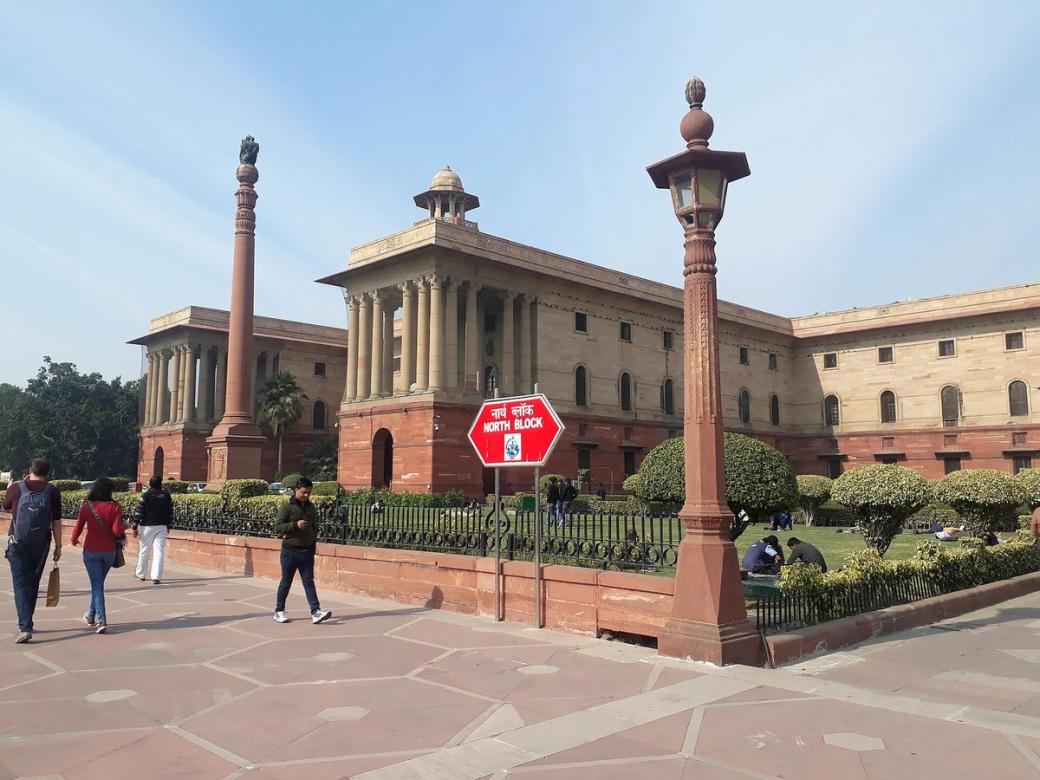
Anti-dumping duties are one of the tools India uses against imports sold for less than their normal value. The power to impose them sits with the Central Government under the Customs Tariff Act, 1975, but each case is first examined by a separate investigating authority, the DGTR.
The gap between a recommendation and a duty widened in 2026. The sections below set out who does what, the limits in the statute and rules, the time allowed after findings, and the figures for findings issued from March to June 2026.
Who Investigates and Who Decides
The Directorate General of Trade Remedies, also called the Trade Defence Authority of India, runs trade remedy investigations. It is a department under the Ministry of Commerce. Its work covers anti-dumping, countervailing (anti-subsidy) and safeguard investigations, along with mid-term and sunset reviews.
The DGTR decides whether dumping, injury and a causal link exist. If it finds all three, it recommends a duty. A recommendation does not take effect by itself. Lakshmikumaran & Sridharan, a law firm, notes that the Ministry of Finance decides whether to impose the duty and is not bound to accept the DGTR's view. Its reasons are not always stated publicly.
The DGTR also houses a Trade Defence Wing. Its role is to act as the nodal point for defending Indian exporters against foreign countervailing duty investigations, and to answer government questionnaires.
The DGTR website lists preliminary and final findings among its notifications. It does not describe what those findings contain.
What Section 9A Lets the Government Impose
Section 9A of the Customs Tariff Act is the operative provision. Where an article is exported to India below its normal value, the Central Government may, by notification in the Official Gazette, impose an anti-dumping duty not exceeding the margin of dumping. The statute refers to normal value and export price, and leaves the method for working them out to rules.
The margin of dumping is determined by the Central Government after whatever inquiry it considers necessary. Notifications are issued by the Department of Revenue, within the Ministry of Finance. The notification for sulphenamides accelerators, discussed below, was signed at the level of an Under Secretary.
Two other powers apply in narrower cases, and both sit with the Central Government. Pending a final decision, duty may be levied on a provisional estimate, and any amount above the final margin must be reduced and refunded. In cases of massive dumping, duty may be applied retrospectively from a date before it was imposed, but not more than 90 days before the notification imposing it.
Under the same section, a duty ceases to have effect after five years from its imposition unless it is revoked earlier. A review can extend that period.
The Three-Month Window After Final Findings
The rules add a deadline. Rule 18 of the Customs Tariff (Identification, Assessment and Collection of Anti-dumping Duty on Dumped Articles and for Determination of Injury) Rules, 1995 requires the Ministry of Finance to impose duty within three months of the publication of final findings, according to Lakshmikumaran & Sridharan.
Findings published in March 2026 therefore reached their deadline at the end of June 2026. Several investigations concluded during May to July 2026 were still inside that window, but all of those windows had closed by 15 November 2026.
The sulphenamides case in Section 5 fits inside that period. Its findings and its notification fell 91 days apart.
Why Few March to June 2026 Findings Became Duties
Lakshmikumaran & Sridharan puts the share of DGTR anti-dumping duty recommendations implemented at about 99.5% between 1991 and mid-2020. Non-implementation rose after 2020. The firm reportedly puts the non-implementation ratio at about 81% for November 2025 to April 2026, while its conclusion refers to recommendations not implemented between October 2025 and June 2026.
The firm says the pattern may create uncertainty for domestic industry, including MSMEs, and may discourage future trade remedy filings. It suggests a formal public-interest assessment framework and clearer guidelines on downstream and inflation concerns.
Of the final findings issued in March 2026, duties were imposed in three cases. Two were sunset reviews: a countervailing duty on textured tempered glass from Malaysia, and an anti-dumping duty on PET resin from China. The third was the anti-dumping duty on sulphenamides accelerators from China, the European Union and the United States.
Affirmative findings in 13 investigations did not produce duties by the end of June 2026. They include faced glass wool and beta naphthol from China, elastomeric filament yarns and nylon filament yarn from China and Vietnam, PVC paste resin from the European Union and Japan, and 2-ethyl hexanol from six origins. Those cases span glass, yarns, polymers and chemicals.
Only three of 16 affirmative findings in the firm's tables led to a duty, an implementation ratio of 19% for March to June 2026.
Only three of 16 affirmative findings in the firm's tables led to a duty, an implementation ratio of 19% for March to June 2026.
Sulphenamides Accelerators, From Findings to Notification
The DGTR issued final findings on sulphenamides accelerators on 20 March 2026. The Ministry of Finance's Notification No. 11/2026-Customs (ADD), dated 19 June 2026, followed 91 days later. It covers the CBS and NS forms of the product, excludes the MOR and DCBS forms, and applies to China, the European Union and the United States.
Rates are in US dollars per metric tonne. Imports from China pay 4 for any producer. From the European Union, Lanxess Belgium N.V. pays ,257 and other producers pay ,748. From the United States, Lanxess Corporation pays and other producers pay 2.
The Lanxess rates apply only if a valid commercial invoice with the prescribed declaration is presented to customs. Otherwise the rates for other producers apply. The duty is payable in Indian currency and runs for five years from publication in the Official Gazette, unless revoked, superseded or amended earlier.
Reading a Customs Notification
Anti-dumping notifications are issued in a Customs series marked (ADD). The sulphenamides notification carries the number 11/2026-Customs (ADD), the G.S.R. number 500(E) and the CBIC file number CBIC-190349/31/2026-TRU.
The sulphenamides notification lists the covered countries, the product forms, producer-specific rates and the duration of the duty. The findings document alone does not show whether a duty was imposed, since the duty starts only with the notification.