Ministry Tells Tribunal OTT Falls Outside Satellite TV Rules in WAVES Case
The Ministry of Information and Broadcasting says OTT services fall outside satellite TV guidelines in a TDSAT case over Prasar Bharati's WAVES platform.
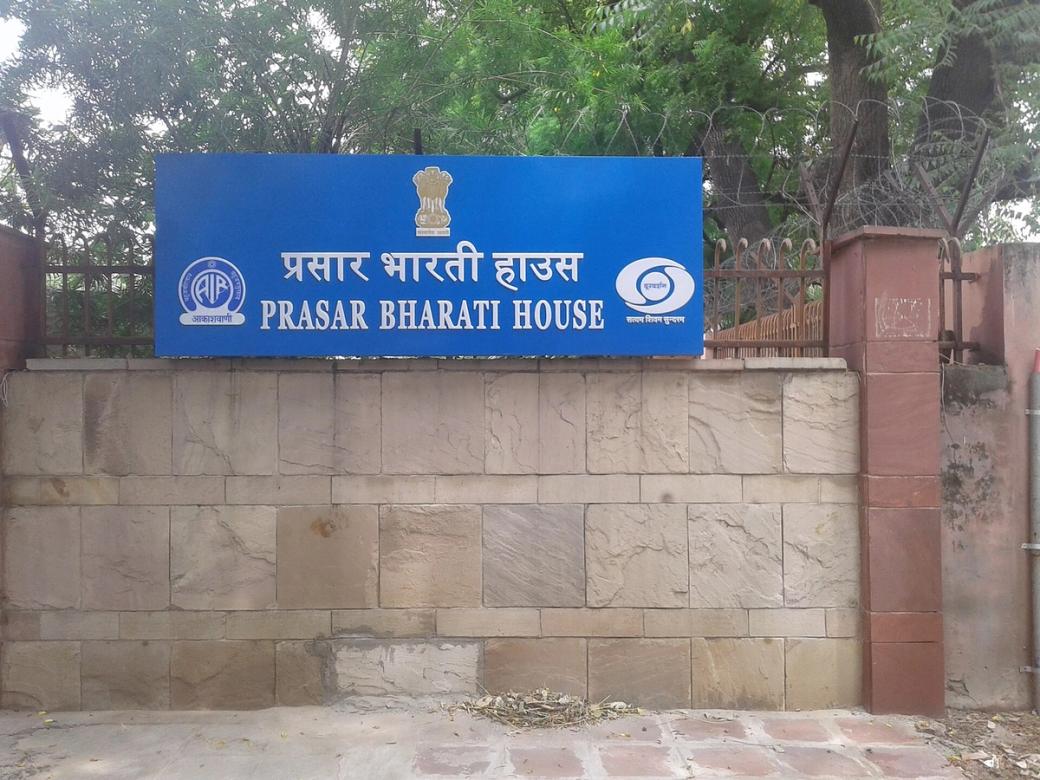
The Ministry of Information and Broadcasting (MIB) has told the Telecom Disputes Settlement and Appellate Tribunal (TDSAT) that over-the-top (OTT) platforms fall outside the rules that govern satellite television channels in India. The ministry's reply answers a challenge by a cable industry body to a plan by Prasar Bharati to carry linear television channels on its OTT service, WAVES.
The dispute turns on a classification question. The ministry says OTT services do not fall within the domain of broadcasting, and that the satellite uplinking and downlinking guidelines do not apply to them. It says the Information Technology Act and the IT Rules, 2021 govern OTT services instead. The case began as a petition against a notice from Prasar Bharati, and the ministry's reply is its answer to that petition.
What Prasar Bharati Plans for WAVES
Prasar Bharati has issued a notice inviting applications to onboard linear satellite television channels on WAVES. Channels apply under the notice to join WAVES.
WAVES is Prasar Bharati's OTT platform. It is described as a digital initiative aimed at widening the reach and accessibility of television content. The notice is the step that the cable federation's petition now challenges.
The Cable Federation's Challenge
The petitioner is the All India Digital Cable Federation (AIDCF). AIDCF is an industry body representing multi-system operators (MSOs). The petition is registered as Broadcasting Petition No. 112 of 2026.
AIDCF argues that the notice breaches the Uplinking and Downlinking Guidelines for Satellite TV Channels in India, 2022. Under its reading, broadcasters must provide signal decoders to specified distribution platform operators, including MSOs, DTH, HITS and IPTV platforms, and OTT platforms do not qualify as recognised distribution operators under those rules.
The federation says that allowing WAVES to carry channels without comparable obligations could create an uneven playing field.
The Ministry's Case That OTT Is Not Broadcasting
In its reply, the ministry says OTT services do not fall within the domain of broadcasting, and that the 2022 guidelines do not apply to OTT platforms and services. The ministry argues that the operation of an OTT service does not involve the uplinking and downlinking of satellite television signals as envisaged under the framework.
The ministry says OTT platforms do not operate under permissions or licences granted by the ministry and therefore cannot be classified as distribution platforms or distribution platform operators under the existing framework. It adds that the satellite guidelines and TRAI regulations do not apply to OTT platforms and services.
For OTT services, the ministry points to the Information Technology Act and the IT Rules, 2021. It says OTT services are governed by those rules rather than the broadcasting licensing framework invoked by AIDCF. The ministry disputes AIDCF's reliance on the term "linear satellite channel", arguing that its use in the context of OTT platforms was generic and did not mean the content was being distributed as a linear satellite television channel under the Cable Television Networks Rules, 1994. It also refers to the explanatory memorandum to TRAI's 2017 tariff order, which stated that the framework applied only to distribution platforms for which the ministry granted a permission or licence.
To support its position on classification, the ministry cites a TDSAT order of 4 October 2023, in which the tribunal observed that an OTT platform was prima facie not a television channel.
The ministry also questions the tribunal's jurisdiction. It cites Section 14(a)(ii) of the TRAI Act, 1997, and argues that the dispute does not involve a licensor-licensee relationship or a dispute between service providers covered by that provision. It asks the tribunal to dismiss AIDCF's petition.
Where the Case Stands and Which Dates Differ
The tribunal issued notice to Prasar Bharati on the AIDCF petition and set the next hearing for 29 April 2026. Reports of the ministry's reply appeared in October 2026.
Storyboard18 gives the filing date of the ministry's reply as 14 July 2026.
No ruling by the tribunal has been reported. Both the jurisdiction question and the scope of the 2022 guidelines remain before the tribunal.
The dispute turns on a classification question.
What the 2021 IT Rules Require of OTT Publishers
The IT Rules, 2021 were notified on 25 February 2021. They cover publishers of curated audio-visual content, a category that includes films, series and podcasts. The ministry's reply points to this framework for OTT platforms.
Publishers in this category must classify content into age-appropriate categories, restrict children's access to age-inappropriate content, and implement an age verification mechanism.
Complaints move through three levels. At Level I, the publisher must address a complaint within 15 days. At Level II, an association of publishers reviews escalated complaints, also within 15 days.
Level III is an inter-departmental committee constituted by the Ministry of Information and Broadcasting. It considers complaints escalated under certain conditions or referred by the ministry itself. The structure combines self-regulation by publishers with government oversight.
What the Competing Positions Rest On
AIDCF's case rests on the distribution framework. It argues that WAVES sits outside the obligations that bind existing distribution operators, and that this gap could create the uneven playing field it describes.
The ministry's case rests on the definition of broadcasting and on the IT Rules, 2021. It argues that a service delivered over the internet falls outside the satellite framework, and it challenges the tribunal's authority to hear the matter under the TRAI Act provision it cites.
Both sides cite the 2022 guidelines, but they read them differently. AIDCF treats them as applying to the notice, while the ministry says they do not reach OTT platforms.
No ruling has been reported, so these remain the arguments on record in the case, and no outcome has been reported.