Scindia Proposes Telecom Advisory Panel for Startups and MSMEs at New Delhi Conclave
Communications Minister Jyotiraditya Scindia chaired a Telecom Startups and MSME Conclave in New Delhi on 24 November 2026 and proposed a telecom advisory panel.
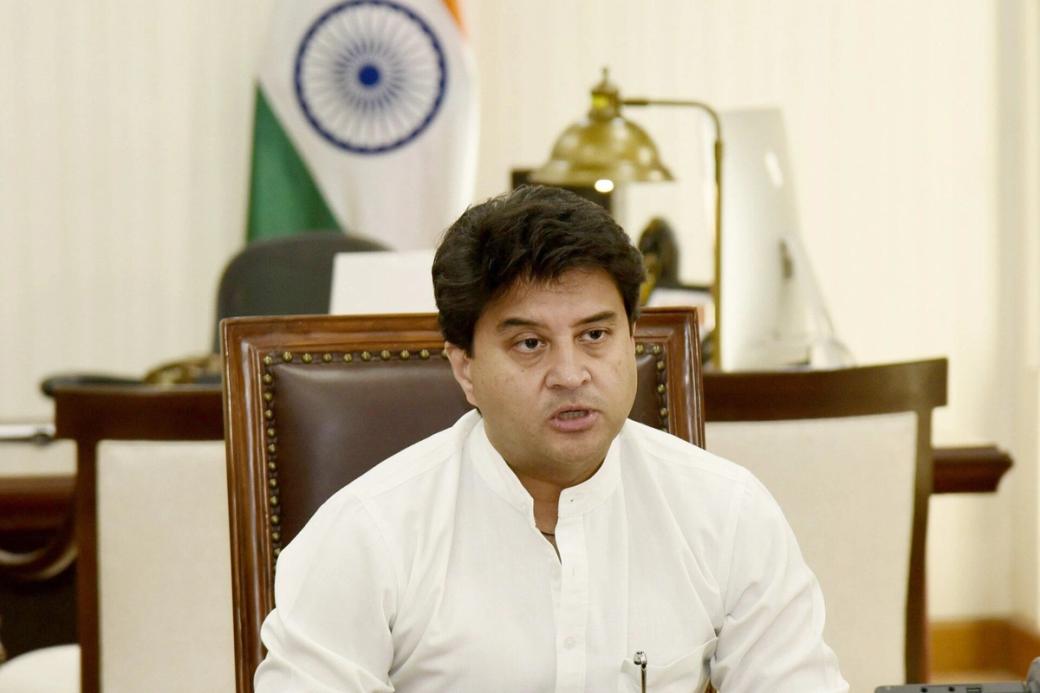
Union Communications Minister Jyotiraditya Scindia chaired the Telecom Startups and MSME Conclave 2026 at Bharat Mandapam in New Delhi on Tuesday, 24 November 2026. The Department of Telecommunications (DoT), under the Ministry of Communications, organised the event for startups, MSMEs, investors, researchers and government officials. Debjani Ghosh, Distinguished Fellow at NITI Aayog and Chief Architect of the NITI Frontier Tech Hub, gave the keynote. DoT officials briefed participants on government initiatives, policies and support frameworks.
The number of startups has grown from a few hundred in 2014 to more than 2 lakh, the minister said. Convergence Now reports that he also proposed an advisory panel to take up concerns from telecom startups and MSMEs. No membership list or timeline for the panel has been reported as of 27 November 2026.
Network Growth and Startup Numbers Cited by the Minister
Greater Kashmir reports that Scindia said internet connections rose from 25 crore to 110 crore, and broadband connections from 6 crore to 104 crore. He described India as the fourth-largest economy and said it is the only telecom network market in the world registering double-digit growth.
He also said the country has moved from being a consumer of technology to a creator of it, and cited telecommunications as one of the clearest examples. Greater Kashmir reports that he credited the growth in startups to initiatives under Prime Minister Narendra Modi's leadership. Greater Kashmir and Business News Week both tie the event to the Viksit Bharat@2047 vision.
Investment, Hackathon and Lab Figures From the DoT
Convergence Now reports that about 200 investments have been made through the Digital Communication Innovation Square (DCIS), and that 96 products from 80 companies have reached commercialisation. The same report says the DCIS supports startups in developing and commercialising indigenous telecom products.
Greater Kashmir and Business News Week both report that the Emerging Technologies Hackathon 2026, organised by TCoE India, drew more than 2,870 registrations and 620 applications across nine technology domains. First prize went to Entra Innovations LLP for VAAYU, a tyre-pressure sensor system-on-chip. Second prize went to Dawniens International Private Limited for Cablesmith, a robotic optical patch panel for remote fibre provisioning. A joint third prize went to IIT Bombay's Team DRISTI for KAVACH, a security engine for private 5G networks, and to Team RUDRA of the Military College of Telecommunication Engineering for VajraLink, an anti-jamming communication system for drones.
Eleven exhibition stalls were set up by startups and MSMEs. Greater Kashmir reports that the DoT is establishing 100 5G Use Case Labs, which Convergence Now describes as places where firms can test and deploy products. Convergence Now also names the Telecom Technology Development Fund (TTDF), a fund for telecom research and development, particularly technologies aimed at improving rural connectivity, and the Technology Development and Investment Promotion (TDIP) scheme, which supports participation in global standardisation.
Captive Networks, the Regulatory Sandbox and the Discussion Areas
The conclave's discussions covered five areas of the telecom technology stack: radio access network (RAN) and core, applications, chipsets, security and standards. Business News Week lists these as the discussion areas.
Two sessions covered provisions of the Telecommunications Act, 2023. The Captive Telecommunication Services session covered Captive Non-Public Networks (CNPNs) and possible enterprise applications. The Regulatory Sandbox session examined a framework for testing innovative technologies in real-world or controlled settings. Both sessions brought together user agencies, companies and startups, according to Business News Week.
Ericsson shared global industry perspectives in the sessions, according to Business News Week and Greater Kashmir. Convergence Now reports that home-grown telecom technologies were showcased at the event.
The number of startups has grown from a few hundred in 2014 to more than 2 lakh, the minister said.
The Proposed Advisory Panel and Open Questions
Convergence Now reports that the minister said industry representatives raised concerns and made specific requests for intervention, and that he proposed the panel. The panel's stated mandate is to resolve concerns raised by telecom startups and MSMEs, facilitate government support and help entrepreneurs focus on developing indigenous telecom technologies. The report says it is meant to help more companies achieve similar progress through government funding and policy support.
No membership list, structure, official order or timeline for the panel has been reported as of 27 November 2026.
Of around 200 DCIS investments, 96 products developed by 80 companies have reached commercialisation, according to Convergence Now. The initiatives named in the reports are the DCIS, the TTDF, the TDIP and the 100 5G Use Case Labs.