How the Duckworth-Lewis-Stern Method Sets a Rain-Hit Cricket Target
The DLS method turns overs and wickets into resources, sets a par score during a stoppage and a revised target after play resumes, under ICC rules.
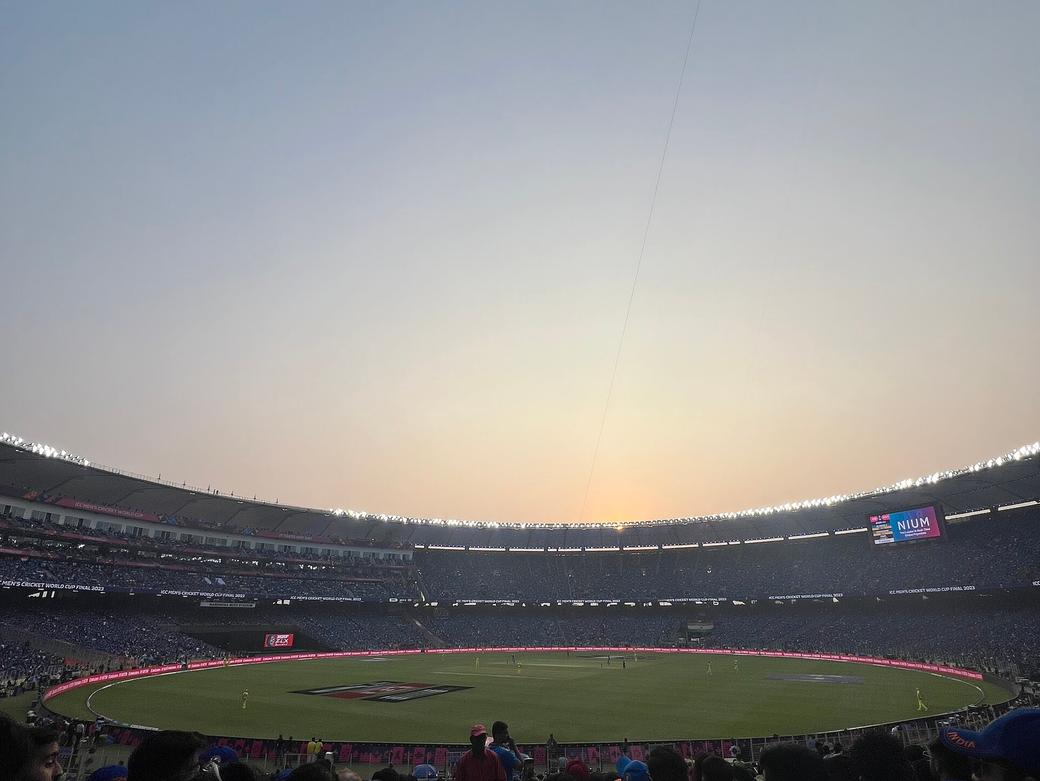
When weather or other factors cut a limited-overs cricket match short, the side batting second cannot simply be handed the first side's total. The Duckworth-Lewis-Stern method, usually called DLS, is a formula designed to set a statistically fair target in those cases. The International Cricket Council (ICC) has formally adopted it to decide the winning side when weather interrupts a match.
The method works in two stages. At the time of an interruption, it sets a par score, the total the chasing side should have reached at that moment. Once play resumes, it sets a single fixed target. Both figures depend on the resources each side still has, not on runs alone.
Resources Combine Overs and Wickets
Each innings is treated as a pool of resources made up of two parts: the overs a team can still face and the wickets it has in hand. A side starting an ODI innings has 300 balls and ten wickets. Those resources run down as play goes on, reaching zero when the balls are used up or all ten wickets fall.
The method turns every combination of overs and wickets into a percentage, with 50 overs and 10 wickets set at 100 per cent. These percentages are stored in a published table or a computer.
Resources are not used up evenly across an innings. The rate is based on ODI scoring patterns studied over several years. Losing overs in the later stages of an innings will usually impact a team more. The model does not track which specific batters have been dismissed.
When an interruption costs overs, the resources lost depend on three things: the number of overs lost, the stage of the innings when they are lost, and the wickets in hand at that point. ESPNcricinfo's explainer notes that a team expecting rain may do better by keeping wickets in hand.
Par Score During a Stoppage, Target After Play Resumes
A par score is the total the chasing side should have at the moment play stops, and it changes with each wicket lost. A target is a single figure, set after the interruption, that the side must reach.
One explainer gives a simplified version of the par calculation: the chasing side's par equals the first side's score multiplied by the chasing side's resources, divided by the first side's resources.
Wickets lost after an interruption do not change the chasing target. ESPNcricinfo's explainer gives the example that a side all out for 300 in 48 overs counts the same as one on 300 for 6 in 50 overs.
The same 2017 explainer also gives a worked example. New Zealand were 67 for 1 after 9.3 overs when four overs were lost, and their total of 291 left Australia a target of 292 from 46 overs. Had New Zealand been 67 for 4 at that point, with the same 291 total, the target would have been 284.
Minimum Overs and When a Result Stands
Under the ICC's clause on match results, a result requires that both sides have had the chance to bat for at least 20 overs. There are two exceptions: a side all out in fewer than 20 overs, or a chasing side that reaches its target in fewer than 20 overs.
A match that does not meet this test is a No Result. The clause treats a match awarded because a team refused to play as a separate case.
When play is suspended and an innings must be cut, the chasing side receives a revised target calculated with DLS. The overs in that innings can never be reduced below 20.
Ties, Abandoned Matches and Whole-Number Targets
A revised target is always a whole number, and one run fewer than that target is a Tie. A match is also a Tie when all innings are completed and the scores are level. Wickets lost are not considered in that comparison.
If the second innings is suspended after at least 20 overs and cannot be resumed, the result is based on the DLS par score at the moment of suspension. Scoring exactly the par is a Tie. Otherwise the chasing side wins or loses by the number of runs above or below par.
The par score is therefore the figure that decides an abandoned chase, not the runs scored after play stops.
A target is a single figure, set after the interruption, that the side must reach.
How a 2025 Rain Stoppage Played Out
A 2025 match between Gujarat Titans and Mumbai Indians shows the steps in practice. Gujarat were chasing 156. After a second rain delay, the target was revised to 147 from 19 overs, according to The National's report.
At 132 for 6 during that second stoppage, Gujarat were behind the DLS par score. The example shows how the par and the revised target are two separate figures, each set at a different point in the same match.
Where the Full Calculation Is Set Out
The ICC's clause on match results refers to the DLS Regulations for the revised-target calculation rather than setting out the formula in full. The ICC's DLS page links to a separate methodology document, a standard table and an FAQ.
The ICC's new playing conditions take effect for international series beginning on 1 October 2026. Series already under way continue under the previous playing conditions, according to Outlook India's report on the changes.
Readers who need the current wording of any clause should check the ICC's published playing conditions.