RBI Opens a Dollar Window for Oil Firms and Sets a 20% Reserve on Rupee Derivatives
From 12 October the RBI will supply dollars to three public sector oil companies, and certain large rupee derivative contracts now need a 20% cash reserve.
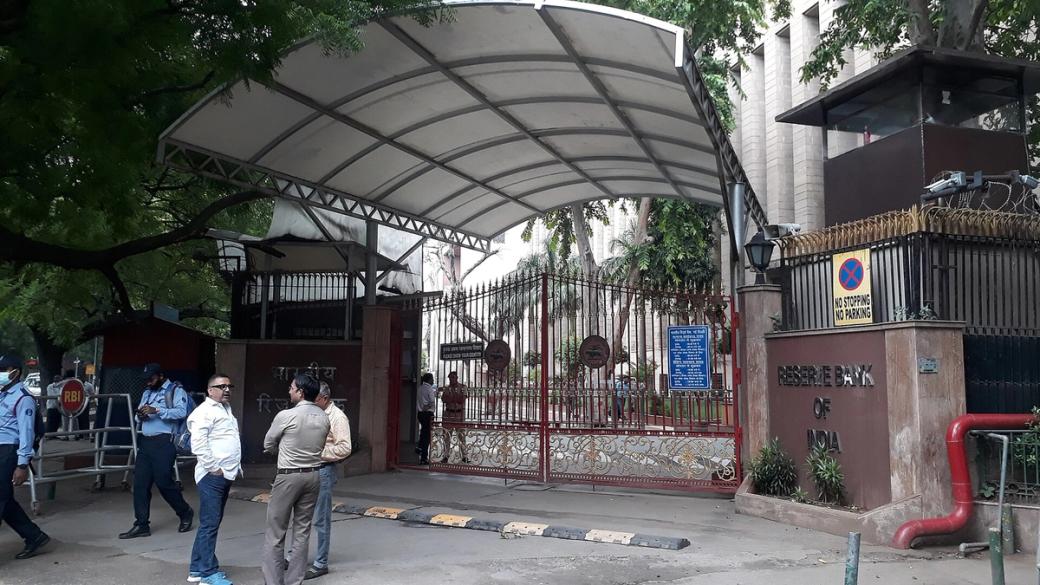
The Reserve Bank of India (RBI) has introduced a series of measures this month to support the rupee, which closed at ₹96.73 per dollar on 9 October 2026, according to BusinessToday. The record low is given as ₹96.96 in a 10 October BusinessToday report, as ₹96.97 in an 8 October report and as ₹96.95 by Sangri Today, all for May 2026.
The first measure gives three public sector oil companies direct access to dollars from the central bank's reserves. The second requires a cash reserve on certain large rupee-linked derivative contracts and lowers a threshold for forex derivative transactions made without an underlying exposure. The RBI's notification is dated 10 October, a clarification followed on 15 October, and the dollar window was set to take effect on 12 October.
Why the Rupee Was Under Pressure Before the Measures
ConstructionWorld reports that the rupee had fallen more than 7% in calendar 2026, and BusinessToday reports that as of 8 October foreign investors had sold almost billion of Indian equities this year.
The same report cites an HDFC Bank economist who attributes the pressure to oil prices, equity valuations, foreign investor outflows, the AI trade and US dollar strength, and who says rate hikes offer a weak short-term defence. ConstructionWorld says crude oil accounts for around 25% of India's imports, and BusinessToday says oil companies' demand for foreign currency can put pressure on the rupee, particularly when global oil prices rise.
BusinessToday, citing Bloomberg, says the RBI has been selling dollars in the spot market and using sell/buy swaps in the forward market. The same report says the RBI's special window to attract dollar deposits brought in 3 billion, and that more than a third of those inflows had already been lost from reserves.
BusinessToday gives forex reserves of 5 billion in the week ended 4 September and 4 billion in the week ended 2 October. The RBI supplies the oil companies' dollars from these reserves.
Oil Companies Get a Direct Dollar Supply
From 12 October 2026, the RBI will meet the entire daily dollar requirement of Indian Oil Corporation, Hindustan Petroleum Corporation and Bharat Petroleum Corporation from its foreign exchange reserves. ConstructionWorld says the facility remains available until further notice.
All three are public sector oil marketing companies. BusinessToday says the window removes their daily dollar demand from the spot foreign exchange market.
According to ConstructionWorld, the window is aimed at easing pressure on the Indian rupee.
The window was set to take effect on Monday, 12 October, two days after the circular that set the derivatives rules. Only these three companies are named as eligible.
What the 20% Reserve Requires From Banks
Circular RBI/2026-27/292, dated 10 October 2026, requires authorised dealers to hold a reserve against eligible contracts. The RBI's notifications page lists the directions under the title Foreign Exchange Risk Reserve.
The reserve equals 20% of the rupee equivalent of each contract's notional amount.
The reserve must be deposited and maintained in cash with the RBI on a daily basis, at least until the contract ends.
The rule covers forex derivatives involving the rupee, above USD 2 million, where the user buys foreign currency against the rupee. The contract must be for hedging current account transactions. It applies to contracts undertaken after the directions were issued on 10 October 2026.
Exemptions, Interest and a Worked Example
An RBI clarification issued on 15 October says a derivative contract of USD 2 million equivalent or less is not subject to the requirement. Authorised dealers must still guard against structuring deals to avoid the rule, according to IANS.
The clarification also says the reserve does not earn interest. Its example is a USD 10 million contract at ₹95 per dollar, which has a rupee value of ₹95 crore. At 20%, the reserve comes to ₹19 crore.
The example uses a rate below the 9 October close of ₹96.73 that BusinessToday reports. The example shows how the reserve scales with the rupee value, so a contract of the same dollar size needs a larger rupee reserve when the rupee weakens against the dollar.
The reserve must be kept in cash with the RBI at least until the contract ends.
Thresholds, Rebooking and the Dealer Undertaking
BusinessToday reports that the RBI also reduced a threshold for forex derivative transactions made without an underlying exposure, from USD 100 million to USD 5 million. Sangri Today says the earlier limit applied to transactions without a genuine business need.
BusinessToday says the move is intended to ensure that large derivative positions are backed by genuine underlying exposures, such as import payments or export receivables.
Sangri Today says authorised dealers must obtain written confirmation from customers that the same business risk has not been hedged through another authorised dealer.
BusinessToday reports that authorised dealers must not allow rebooking of rupee forex derivative contracts cancelled after the directions were issued, while rollovers at maturity remain permitted. Sangri Today says rebooking is banned, and ConstructionWorld says it is restricted.
The Stated Aim and How the Measures Differ
The three measures act on different parts of the market. The window changes how dollars reach three oil companies, the reserve applies to certain large rupee derivative contracts, and the lower threshold concerns forex derivative transactions.
BusinessToday says the reserve requirement is meant to strengthen risk management and discourage excessive positions. The USD 2 million exemption and the USD 5 million threshold apply to different transactions, so the two figures should not be read as one limit.
In its 8 October report, BusinessToday said the rupee was just 0.2% away from its record low of ₹96.97 per dollar, reached in May 2026.