SEBI Proposes ₹1 Lakh Minimum SME IPO Application and ₹3 Crore Average Profit Test
SEBI's 14 October 2026 consultation paper proposes cutting SME IPO minimum applications to ₹1 lakh and setting a ₹3 crore average profit test, with comments open until 4 November.
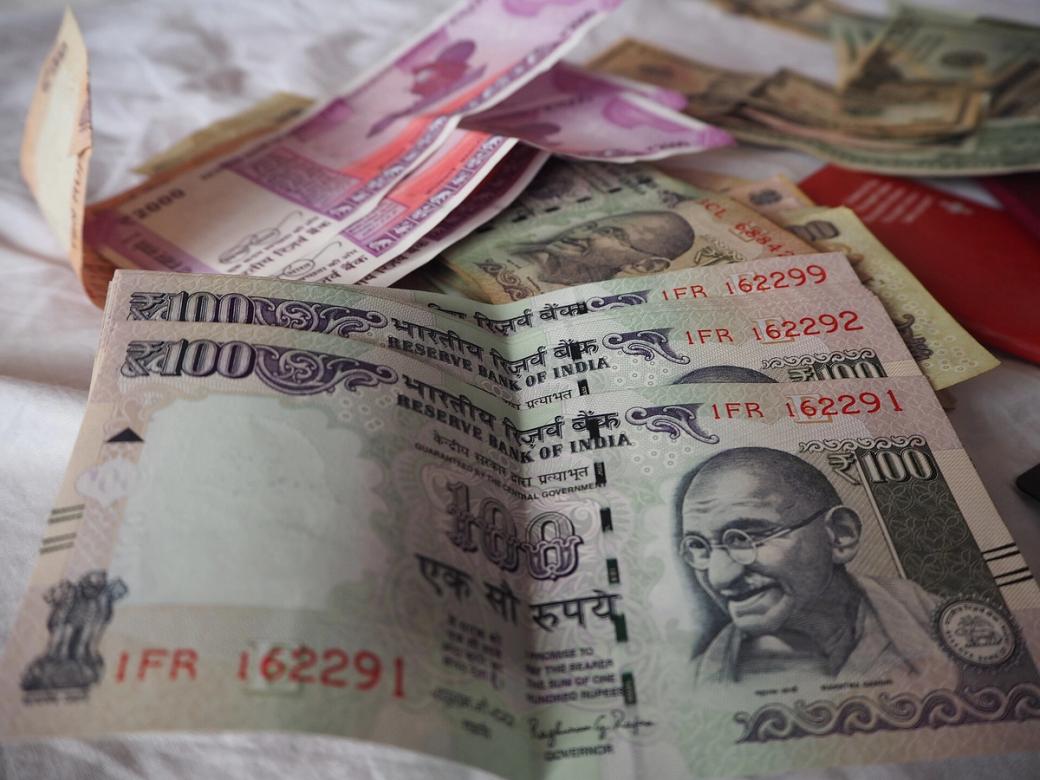
The Securities and Exchange Board of India (SEBI) has proposed a broad overhaul of the rules for initial public offerings (IPOs) on the SME platform, where smaller companies raise money from the public. The consultation paper is dated 14 October 2026, and public comments are open until 4 November 2026.
The minimum application would fall to ₹1 lakh. The same paper would raise the profit test for issuers to an average of ₹3 crore a year, move listing eligibility to a market capitalisation test, and reduce the trading lot to a single share.
A ₹1 Lakh Minimum Split Into Lots of at Least ₹25,000
The paper proposes a minimum application of ₹1 lakh. Each lot would be worth at least ₹25,000, so an applicant would need to bid for at least four lots. Moneylife and Outlook Money both present the figure as a cut from ₹2 lakh. Inc42 says the ₹2 lakh minimum was introduced in March 2025.
Retail allocation would also change. Each retail allottee would receive at least one minimum lot, subject to availability, with the remaining shares allotted in proportion, according to Moneylife, Outlook Money and Kotak Neo. Inc42 says the paper introduces a Retail Individual Investor category aligned with the main board.
The minimum number of allottees would rise from 200 to 500. Inc42 reports a minimum subscription requirement of 90% of the offer, excluding offer-for-sale shares.
Single-Share Trading After Listing
The trading lot on the SME platform would become one share, so investors could buy or sell individual shares after listing. Kotak Neo also reports this change. Inc42 says it replaces lot sizes that are linked to the share price, which means the smallest tradable quantity currently depends on the price.
Inc42 reports that the change addresses odd-lot holdings, citing about 5% of unique Permanent Account Number (PAN) holders who hold such shares.
The change applies to trading after listing. It does not alter the minimum application amount, which the paper sets at ₹1 lakh.
How Market Capitalisation Decides Where a Company Lists
The paper would replace the existing paid-up share capital criterion, which Moneylife puts at up to ₹10 crore, extendable to ₹25 crore, with a test based on post-issue market capitalisation. Companies valued up to ₹1,000 crore would have to list on the SME platform, according to Moneylife and Outlook Money.
Companies valued between ₹1,000 crore and ₹4,000 crore could choose between the SME platform and the main board, subject to conditions. Those above ₹4,000 crore would go to the main board, according to Moneylife and Taxguru.
On migration, Inc42 reports that companies valued up to ₹1,000 crore would not face mandatory migration on valuation alone, and that migration above ₹4,000 crore would be mandatory. For the middle band, migration would be voluntary. Board approval alone would be enough, without a shareholder vote.
The ₹3 Crore Profit Test and the Alternative Route
The current standard requires operating profit of at least ₹1 crore in two of the three preceding financial years. The paper would instead require an average annual operating profit of at least ₹3 crore over the preceding three financial years, on a consolidated basis, according to Moneylife and Outlook Money.
Issuers that fail the profit test could still list through an alternative route using book-building. Moneylife, citing Regulation 229(7), reports that at least 75% of the net offer would go to qualified institutional buyers (QIBs) through that route. Taxguru says the proposed framework provides for 5% of the QIB portion to be allocated to mutual funds.
On that route, retail individual investors would receive no more than 10% of the net offer and non-institutional investors no more than 15%, according to Outlook Money and Inc42. Inc42 also reports that, in book-built issues generally, issuers may allocate up to 60% of the qualified institutional buyer (QIB) portion to anchor investors.
Converted and reorganised businesses would need four consecutive financial quarters from conversion, instead of one full financial year, according to Inc42.
For small-company listings, the reports describe a higher profit bar on the standard route and a book-built alternative for issuers that fail it, with at least 75% of the net offer going to qualified institutional buyers.
The proposal aims "to distinguish business maturity from financial performance."
Underwriting, Market Making and Lock-In Periods
The paper proposes removing compulsory market making. Inc42 says market-making fees accounted for 1.25% to 4.20% of total issue expenses across the NSE and BSE in FY25 and FY26, and Taxguru describes the change as a proposed discontinuation.
On underwriting, Outlook Money reports that the compulsory 100% underwriting would be scrapped, with underwriting limited to the unsubscribed portion. Inc42 says the lead manager's minimum 15% self-underwriting obligation would also go.
Inc42 reports that the paper proposes removing the fixed ₹10 crore ceiling on general corporate purposes while keeping the limit of 15% of the amount raised. Offer-for-sale (OFS) shares would carry a one-year holding requirement, according to StartupTalky, and the 20% ceiling on the QIB OFS component would be removed, according to Inc42. Inc42 adds that the primary market advisory committee had suggested removing a 50% cap on QIB pre-issue holding.
Lock-in periods would change as well. Inc42 reports a three-year lock-in on minimum promoter contribution, a one-year lock-in on promoter holdings above that minimum, and a six-month lock-in for non-promoter pre-issue capital, down from one year.
Stated Aims, Current Figures and Timing
StartupTalky reports that the proposals follow review by a working group and an advisory committee, and that SEBI's stated aims are to increase investor engagement, reduce fundraising expenses and strengthen investor protections.
The same report cites SME platform figures as of 31 July 2026: 1,496 companies listed since the platform began, ₹40,222 crore raised, and 365 companies migrated to the main board.
The proposals are not yet in effect, and comments close on 4 November 2026. Moneylife reports that the new rules would apply to drafts filed three months after notification in the Official Gazette, and StartupTalky refers to a three-month transition period.