How the Closing Auction Sets Final Prices, and the Concerns It Drew
Since 3 August 2026, a closing auction has set final stock prices. SEBI's revised rules move expiring derivatives to a 30-minute VWAP.
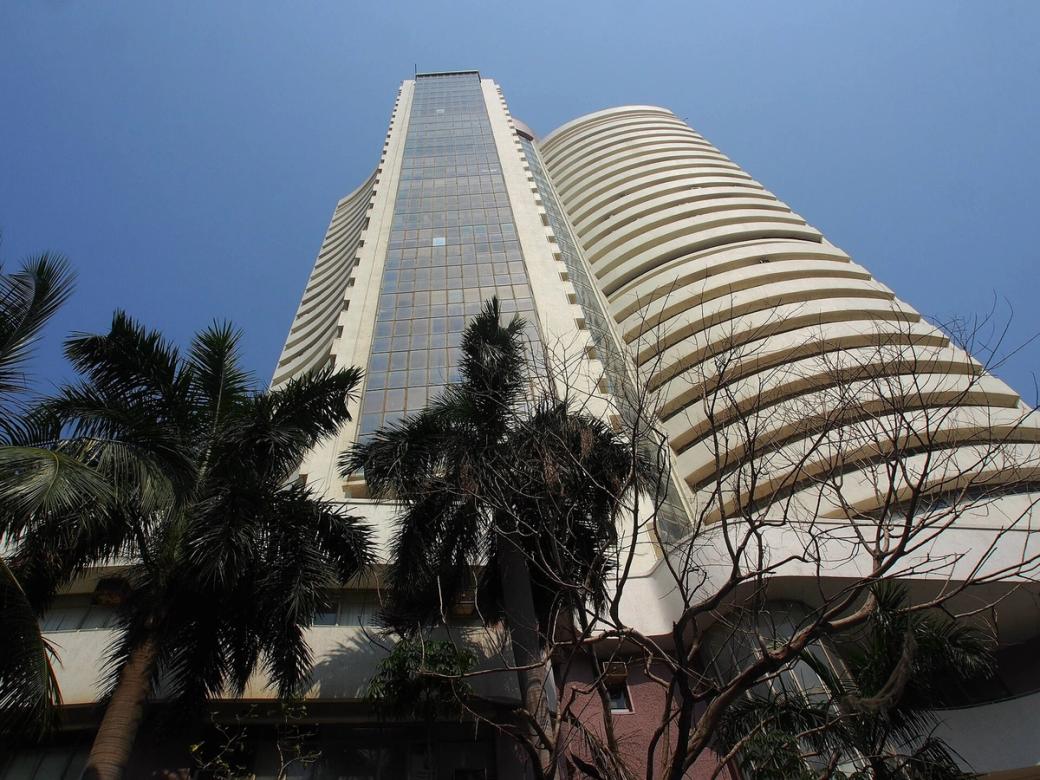
Since 3 August 2026, final prices for stocks with futures and options contracts have been set by a closing auction session, held at the end of each trading day. The Securities and Exchange Board of India (SEBI) introduced the framework through a circular dated 16 January 2026.
Market participants raised concerns about settlement prices, sharp price spikes and low liquidity. SEBI has now revised the rules. The auction stays, but expiring futures and options will settle on a price based on trading in the last 30 minutes of the regular session from 7 December 2026. The revision also changes trading hours and the treatment of pending orders.
What the Auction Was Designed to Do
SEBI's framework describes the session as a way to determine closing prices through a defined process, according to Outlook Business. Business Today reports that the auction replaced the earlier closing-price process with an auction-based system.
The auction also reached into derivatives. Business Today reports that the change raised concerns about the impact of auction-derived prices on derivatives settlement, the part of the framework that SEBI has now revised.
In the circular, SEBI links the review to efficient price discovery and the orderly functioning of the cash and derivatives segments, according to Outlook Money.
How the Ten-Minute Session Runs
From 7 December 2026, the session runs from 3:30 to 3:40 pm on every trading day, according to CorpLawUpdates. In the first minute, from 3:30 to 3:31 pm, the system sets a reference price using the volume-weighted average price (VWAP) of trades in the final 15 minutes of continuous trading, according to TaxGuru and CorpLawUpdates. If there are no such trades, the reference price is the day's last traded price, or, if the stock did not trade all day, the previous trading day's closing price, per CorpLawUpdates.
From 3:31 to 3:36 pm, market and limit orders are accepted. From 3:36 pm, only limit orders can be entered. The entry window closes at a random time between 3:38 and 3:40 pm, according to TaxGuru.
New iceberg orders cannot be placed during the auction, and stop-loss orders are not allowed during it, per CorpLawUpdates. TaxGuru reports that carried-over orders modified during the auction have their time priority changed.
Why Expiry-Day Prices Drew Complaints
After the session came into force, market participants raised concerns about settlement prices, sharp price spikes and low liquidity, Outlook Business reports.
An Outlook Money report, citing unnamed sources, said the system had triggered extreme volatility and abrupt price swings, particularly on expiry days. It cited a recent fall of more than 2% in indicative index prices during auction windows, before a recovery.
Whalesbook reports that the previous auction often led to high price volatility at the end of the trading day, and that sharp price swings had discouraged participation in futures and options.
Feedback during the September consultation also raised concerns about concentration risk in auction-based settlement, per CorpLawUpdates. SEBI issued a consultation paper on 12 September 2026, according to TaxGuru and CorpLawUpdates, and Outlook Business reports that the regulator received more than 20,000 suggestions, while Outlook Money reports SEBI saying it received around 20,000 comments. Business Today reports that SEBI said its initial experience with the session and stakeholder feedback highlighted the need to review a few aspects of the session and the settlement method.
Business Today reports, citing Moneycontrol, that SEBI's Secondary Market Advisory Committee recommended keeping the existing VWAP method for settling expiring index and stock derivatives. The panel opposed an immediate move to a blended formula that includes auction prices, and recommended keeping the current method for at least a year before alternatives are considered.
Under the revised circular, expiring derivatives settle on the VWAP of the last 30 minutes of continuous trading, not on auction prices.
How the 30-Minute VWAP Settlement Works
Under the revised circular, expiring derivatives settle on the VWAP of the last 30 minutes of continuous trading, not on auction prices. Business Today gives that window as 3:00 to 3:30 pm, as does Outlook Business.
For expiring stock derivatives, clearing corporations calculate the settlement price from the VWAP of the underlying stock during that window, across all stock exchanges, according to Outlook Business. Whalesbook describes the same final 30 minutes of continuous trading as the basis for settlement.
For expiring index derivatives, the settlement price is the value of the underlying index, calculated from the VWAP of its constituent securities over the same 30 minutes. Exchanges continuously disseminate indicative values to market participants in real time, Outlook Business reports.
Business Today reports, citing Moneycontrol, that the panel recommended retaining the existing VWAP method, which the revised circular uses for expiring derivatives. For traders, the settlement price therefore reflects trading across the final half-hour of regular trading rather than a single auction result.
What Changes for F&O Traders, and When
CorpLawUpdates lists 7 December 2026 as the effective date for most changes, including the auction timings, the VWAP settlement method, margins, the reference price and price bands. The rules for moving unexecuted orders take effect on 8 February 2027, according to TaxGuru and Outlook Business.
Stock derivatives trade until 3:45 pm on all days, including expiry days. Index derivatives trade until 3:45 pm, but expiring index contracts stop trading at 3:30 pm on their expiry day, according to Outlook Business and TaxGuru.
Under the carry-forward rules, unexecuted limit orders move into the auction unless they are stop-loss orders or fall outside applicable price bands, according to TaxGuru and CorpLawUpdates. Unexecuted iceberg orders within the price bands convert to fully disclosed limit orders unless the participant opted out when placing the original order, and they have lower time priority than other carried-forward limit orders.
The Outlook Money report, citing unnamed sources, said the auction would still set end-of-day prices for underlying stocks in the less liquid cash market under the planned approach.
The circular is dated 15 October 2026, per TaxGuru, CorpLawUpdates and Outlook Money; Outlook Business says SEBI revised the framework on Thursday, which was 15 October. The same Outlook Money report had expected the changes to take effect by the end of October; the dates in the circular are 7 December and 8 February.