Supreme Court Dismisses Appeals, Reversing Yes Bank's ₹8,415 Crore AT-1 Bond Write-Off
On 15 October 2026 the Supreme Court dismissed appeals against the write-off of ₹8,415 crore in Yes Bank AT-1 bonds; the shares closed down 14.53%.
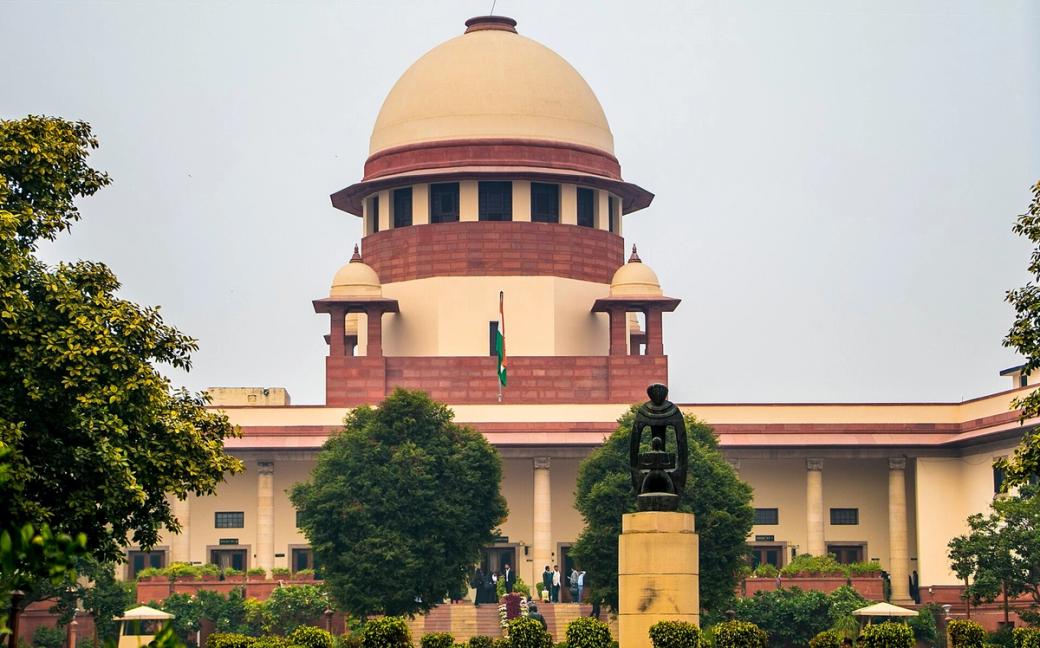
The Supreme Court on 15 October 2026 dismissed appeals by Yes Bank, the Reserve Bank of India (RBI) and the Union government against a Bombay High Court ruling that the RBI-appointed administrator had no power to write down ₹8,415 crore of additional Tier-1 (AT-1) bonds. The write-off, made in March 2020 during the bank's rescue, is therefore reversed. Yes Bank's shares closed 14.53% lower the same day.
The ruling restores the bonds, which the bank says would affect its common equity ratio by a pro forma 250 basis points, with its Tier-1 ratio likely to remain at 14.0%. Bondholders regain the claims they lost in 2020, and the bank says it is reviewing the judgment. The write-down appeared in the RBI's draft reconstruction scheme of 6 March 2020, which the RBI opened for public consultation until 9 March.
What the Court Held on the Administrator's Powers
A bench of Justices Dipankar Datta and Augustine George Masih found that the administrator lacked authority to write off the bonds, according to ThePrint. The final reconstruction scheme, notified on 13 March 2020, omitted a write-off provision that had appeared in the draft. “It is a settled legal principle that a power not specifically conferred cannot be implicitly vested through a general, omnibus savings clause,” the court said.
The RBI's draft, announced on 6 March 2020, said the instruments qualifying as Additional Tier 1 capital under the Basel III framework would stand written down permanently, in full, from the appointed date. ThePrint reports that the final scheme did not carry that write-off forward.
Business Today reports that the court found the Centre had deliberately excluded the clause permitting write-down from the scheme. It also held that the administrator acted under a mistaken belief, and that the write-off went beyond the powers set by the Master Circular read with the scheme.
On the regulator's role, ThePrint reports that the court called the RBI a “mere bystander” while the bank's core equity Tier-1 ratio fell to 0.6% by 31 December 2019, and that Yes Bank's business was being carried out in a clandestine manner.
Bond Terms, Restoration and Capital Ratio
Yes Bank issued ₹3,000 crore of AT-1 bonds in December 2016 and ₹5,415 crore in October 2017. According to the RBI's release, the bank was placed under moratorium from 5 March to 3 April 2020, and the write-off followed in the rescue.
Business Today reports that the Supreme Court ordered the restoration of the bonds. ThePrint reports that annual coupon payments are unaffected and must be made as set out in the bonds' Information Memoranda.
Business Today reports that Yes Bank has said the pro forma impact of the reinstatement on its CET-1 ratio, including profits as on 30 June 2026, is expected to be 250 basis points. The bank also said its Tier-1 capital ratio, on a pro forma basis, is likely to remain unchanged at 14.0%.
The RBI's draft scheme provided for an investor bank to hold 49% of the bank after the infusion, at a price of not less than ₹10 per share, and required the investor bank not to reduce its holding below 26% for three years. The draft also said the bank's deposits and liabilities would continue on the same terms, unaffected by the scheme except as the scheme provides.
Share Price Move and Compensation Risk
The shares closed at ₹18.12 on 15 October 2026, down 14.53% from the previous close of ₹21.20. The intraday low was ₹16.96, about 20% below the previous close.
As of 16 October 2026, intraday, the shares were more than 2% lower again, Business Today reports.
Business Today reports that the ruling could leave Yes Bank facing compensation claims from investors, potentially adding to its capital requirements.
“It is a settled legal principle that a power not specifically conferred cannot be implicitly vested through a general, omnibus savings clause,” the court said.
Next Steps for Bondholders and Bank Rescues
Yes Bank has said it will examine the judgment in detail and evaluate all available legal options, Business Today reports. It has also said it will make further disclosures as required.
ThePrint reads the ruling as a reminder that even during a banking crisis, authorities must follow prescribed procedures rather than placing systemic rescue above regulatory compliance. The RBI's draft scheme also says that from the appointed date the administrator's office shall stand vacated and a new board constituted.