
China's Exports Rise 36.3% in September as Monthly Surplus Hits 3.5 Billion
China's exports rose 36.3% in September 2026. Chinese customs data put India's trade deficit with China at 5.93 billion for January to September.
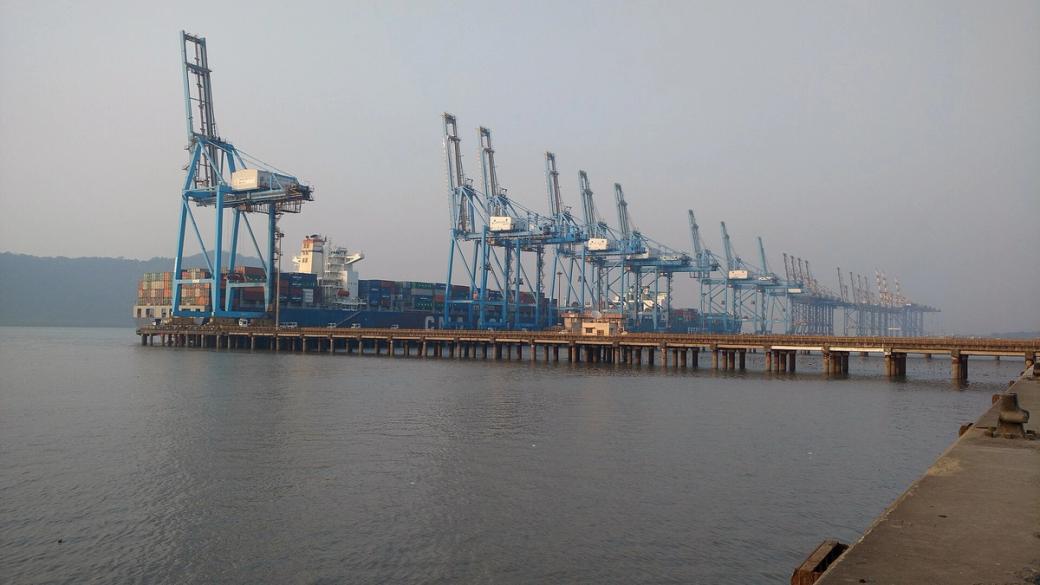
China's exports rose 36.3% year on year in September 2026, and its monthly trade surplus reached 3.5 billion, according to China's customs agency. The data were released on Wednesday. The surplus for January to September totalled 8.11 billion.
Domestic makers have complained of dumped imports. India's Directorate General of Trade Remedies (DGTR) has initiated five anti-dumping investigations, as Business Upturn reported on 6 October.
What the September figures show
Exports rose 36.3% from a year earlier in September, above a forecast of 25.5%, according to NBC News. Export growth had been 25% in August. Imports rose 31% in September, up from 28.2% in August. NBC News puts the forecast for imports at 24.5%.
The September surplus was 3.5 billion, wider than the 9.1 billion recorded in August, according to ABC News. NBC News says the January to September total puts a trillion surplus within view. It also lists China's September surplus with the United States at .01 billion, a 20-month high, and with the EU at .8 billion.
ABC News reports strong growth in high-technology goods from January to September. Semiconductor exports rose 108.1%, automatic data processing equipment 54.6% and auto exports 54.3%. NBC News says auto exports grew by more than 50% in both value and volume.
NBC News gives China's 2025 annual trade surplus as .189 trillion, a record. ABC News says expectations are growing that the full-year surplus for 2026 could surpass last year's record.
India's deficit with China passes 0 billion
India's deficit with China reached 5.93 billion in the first nine months of 2026. That is up 20.7% from a year earlier, according to China's General Administration of Customs, as reported by ETV Bharat.
Chinese exports to India rose 23.3% to 5.19 billion, while Indian exports to China rose 40.7% to .26 billion. Total bilateral trade reached 4.45 billion, up 25.4%, and Chinese exports made up about 87% of it.
Indian exports grew faster, but from a much smaller base; the gap widened by about billion in absolute terms. ETV Bharat says India's exports to China are a mix of primary and resource products such as ores, fuels, seafood and agricultural items. Chinese exports are dominated by electronics, machinery and chemicals.
ETV Bharat also cites India's Commerce Ministry for fiscal year 2025-26, which puts the deficit at 2.6 billion, up from .2 billion in 2024-25. ETV's own import and export figures for that year (1.63 billion and .47 billion) give about 2.2 billion instead. That series covers a different period and uses a different source, so it is not directly comparable with the nine-month figure.
Electronics and a deficit ThePrint describes as structural
ThePrint puts India's electronics deficit with China at .1 billion in FY26, roughly double the FY19 level of about billion. The figures use HS Chapter 85, which covers electrical machinery and electronic equipment.
Electronic integrated circuits accounted for a deficit of roughly .9 billion in FY26, and the integrated circuit deficit reached .085 billion in April to July 2026, ThePrint reports. The number of tariff lines in which China supplied 80% or more of India's imports rose from 461 in FY19 to 636 in FY26.
The analysis draws on a report by Koan Advisory and the Institute of Chinese Studies. It describes the deficit as structural rather than a product of cyclical swings in imports.
The report says India's dependence on Chinese manufacturing had widened across a larger range of products. It also points to rising imports routed through Hong Kong, Singapore and Vietnam, goods that may originate primarily in China.
India's deficit with China reached 5.93 billion in the first nine months of 2026.
Five anti-dumping probes and the steps that follow
The DGTR has initiated five anti-dumping investigations. Business Upturn reports that domestic producers alleged the imports were being sold at dumped prices.
The products are persulphates, clavulanic acid and its amine salt, counterbalance forklifts, internally grooved copper tubes and pipes, and caprolactam. China is named in all five. China alone is named for persulphates. The other four add at least one more country: the EU for clavulanic acid, Japan for counterbalance forklifts, Thailand and Vietnam for copper tubes, and Russia, Thailand and the United States for caprolactam.
For caprolactam, Business Upturn reports that India imports roughly 95% of its requirement. It names Gujarat State Fertilizers & Chemicals (GSFC) as the largest domestic producer, with annual capacity of about 70,000 tonnes across two plants, and Fertilisers and Chemicals Travancore (FACT) as another Indian manufacturer. Indian Chemical News says GSFC filed the formal complaint behind the caprolactam case.
Indian Chemical News describes caprolactam as a raw material for Nylon-6, which is processed into nylon tyre cord fabric and nylon filament yarn for the textiles sector. It reports that import volumes rose while domestic demand fell, and that landed prices of the imports were significantly below the selling costs and cost of production of domestic players.
Opening an investigation does not mean a duty has been imposed. Indian Chemical News says the DGTR will examine the degree, existence and economic effect of the alleged dumping, and could recommend duties if harm to Indian businesses is confirmed.
The DGTR will seek submissions from exporters, importers and users, then issue preliminary findings before recommending any duty to the finance ministry. Business Upturn describes the findings quoted at this stage as prima facie. The process typically runs several months and can end with no duty at all.
Europe's pressure and the outlook for trade ties
The EU has been pressing China to rebalance trade, according to ABC News. EU trade chief Maroš Šefčovič visited Beijing on 9 October and said a deal had been reached with Beijing, including halving Chinese hybrid car imports into the EU over the next few years. ABC News also reports that the EU runs a daily trade deficit with China of more than .1 billion.
Nguyen Hoang Nam of Capital Economics, quoted by NBC News, said EU restrictions could follow but expected the economic fallout for China to be small. Ecaterina Bigos of BNP Paribas Asset Management, quoted by Fortune, said the EU's push to rebalance trade directly targets high-value exports.
Lynn Song of ING, also quoted by NBC News, said key trade ties were likely to remain stable through year-end. Max Zenglein of the Conference Board, quoted by ABC News, said a slowdown in the global AI investment cycle could pose a greater threat to China's export growth than trade restrictions imposed by other countries.
Eswar Prasad of Cornell University, quoted by Fortune, said many of China's trading partners are fearful of their manufacturing industries being overrun by Chinese exports.
ABC News reports that the International Monetary Fund has cut its 2026 growth forecast for China to 4.5%. It says robust exports have not fully offset domestic weaknesses.
China's vice customs minister Wang Jun said external uncertainties could affect trade but there was foundation and support for continued growth in exports and imports in the fourth quarter, according to NBC News.